TL;DR: A water heater flood in a Corona home almost always needs two different calls: a licensed plumber to shut down and replace the failed tank, and a certified drying crew to pull water out of the slab, drywall, and baseboards before it spreads. Some restoration companies handle both halves on the same visit, which is the fastest path once a garage or closet floor is already standing in water.
If your water heater let go in a Corona garage or a hallway closet and you’re standing in an inch of water wondering who to dial first, the honest answer is usually both, and the fastest path is one call that covers both halves. Call Dry County Restoration at (951) 667-9910: the crew is a 24/7 IICRC Certified Firm (WRT, ASD) licensed in California, and coordinates the plumbing repair and the structural drying on the same visit instead of making you schedule two separate companies.
What should you do in the first five minutes?
Shut the cold water supply valve on top of the tank, then kill the gas valve or the breaker feeding the heater, before you touch anything else. That stops the flood from growing and removes the fire or shock risk while help is on the way.
The cold supply valve is usually a small oval or lever handle on the pipe entering the top of the tank; turn it clockwise until it stops. For a gas unit, turn the gas control knob to “off” at the base. For an electric unit, go to the panel and flip the dedicated breaker, usually labeled “water heater.” If standing water is anywhere near an outlet, light switch, or the electrical panel itself, stay out of it and shut off power from a dry spot first, or wait for someone who can.
Do you call a plumber, a restoration crew, or both?
A plumber replaces or repairs the tank itself; a restoration crew removes the standing water and dries the structure underneath and around it, and most Corona homes with a tank failure need both. Skipping the second call is the most common reason a “fixed” leak turns into a mold problem a few weeks later.
The plumber’s scope ends at the appliance: isolating the line, draining what’s left in the tank, and installing the replacement unit or repair part. Any licensed California plumbing contractor should carry a current CSLB license you can verify online before they touch your plumbing. The restoration side is a separate scope: extracting water from the slab or subfloor, mapping moisture with a meter behind drywall and baseboards, and running drying equipment set up to the ANSI/IICRC S500 standard for water damage restoration. When one company handles both, as ours does, you get one scope of work and one point of contact instead of two invoices and two schedules to coordinate. See the water heater flood cleanup and emergency plumbing service pages for what each side of the job actually covers.
Does it matter whether the heater sits in a garage or an interior closet?
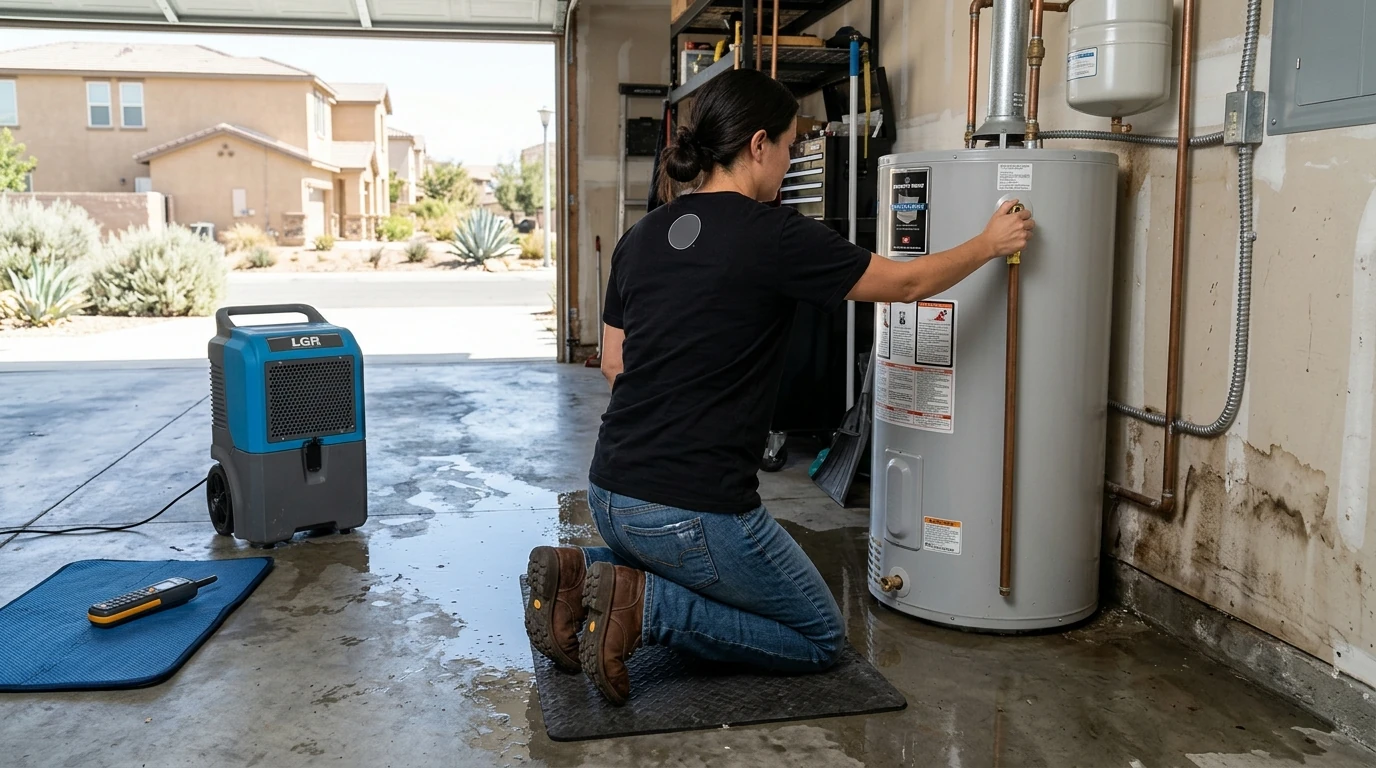
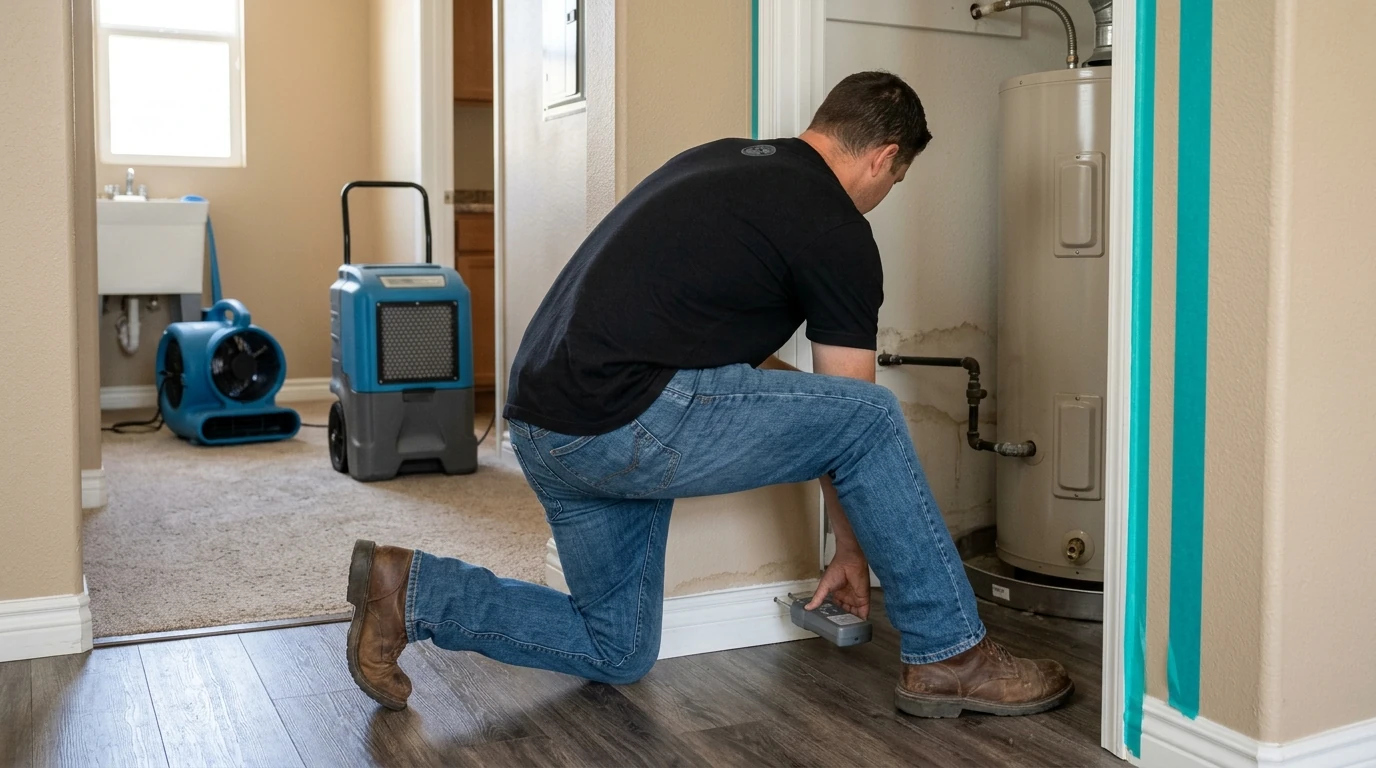
Location changes where the water travels, not whether you need drying. On a garage slab, water spreads fast across the concrete and wicks up into the base of the drywall at the wall line; in an interior closet, it soaks the subfloor and baseboards and often shows up under the flooring in the room next door before anyone notices.
A garage floor that looks dry an hour later can still be a problem. Concrete sheds surface water quickly, but drywall paper and the wood baseboard behind it pull moisture upward through capillary action, long after the visible puddle is gone. That’s why a moisture meter reading at the base of the wall matters more than how the floor looks. For a closet install, the same wicking happens into the subfloor, and if the closet backs onto a bedroom or hallway, that’s often where the carpet or laminate swells first.
What if the water heater is in an attic or an upstairs closet?
Water from an attic or upstairs unit runs downhill through insulation and drywall, so the real damage usually shows up as a stained ceiling or a soft spot on the floor below, not at the tank itself. By the time a ceiling stain appears, insulation above it has typically been wet for a while.
That delay matters because mold can begin growing on wet material within 24 to 48 hours. An attic or upstairs leak needs the ceiling drywall checked and, in most cases, opened in a contained area so the cavity above can actually dry, not just the visible stain painted over.
What should you photograph before anything gets moved?
Photograph the tank’s data plate (age and serial number), the water line on walls and flooring, and anything sitting in the water, before cleanup starts and before anything gets thrown away. Adjusters use these photos to confirm the cause and the extent of the loss.
Get a wide shot of each affected room, then close-ups of the tank base, the corrosion or rupture point if visible, and the water line on baseboards. Homeowners insurance typically covers sudden, accidental tank failure, but usually excludes damage from a slow leak or years of visible corrosion, so photos of the failure point matter for how the claim gets classified. For a fuller breakdown of what’s typically covered, see our guide to homeowners insurance and water damage.
If the flooding came from a supply line rather than the tank itself, the first-five-minutes triage looks almost identical; see who to call for a burst pipe in Corona for that version.
Once the valve and breaker are off and the damage is photographed, the next step is getting a written scope for both the repair and the drying before either one starts. Request a water heater flood assessment so you’re not guessing what the insurance adjuster will ask for later.
About Dry County Restoration
Founded in 2020 and based in Corona, the company is an IICRC Certified Firm carrying Water Damage Restoration (WRT) and Applied Structural Drying (ASD) credentials, licensed in California and available 24/7. Crews handle water heater flood cleanup, emergency plumbing, water damage restoration, and the full range of drying and reconstruction work across Corona, Riverside, and the surrounding Inland Empire.
Need help now? Call Dry County Restoration at (951) 667-9910.
Video Transcript
Your water heater just failed, and now there’s water spreading across the floor. Who do you call first, a plumber, a drying crew, or both? In Corona, the honest answer is almost always both, one company to fix the tank, another to dry out your home before mold sets in. First, shut the cold water valve on top of the tank, then turn off the gas or breaker feeding the heater. If standing water is anywhere near an outlet or your electrical panel, stay back and shut off power from a dry spot first. A plumber replaces the failed tank, but that’s where their job ends, they don’t dry out your walls or flooring. A restoration crew extracts standing water and uses moisture meters to track hidden water behind drywall and baseboards. A garage slab sheds water fast, but moisture still wicks up into drywall and baseboards long after the puddle disappears. An attic or upstairs leak often shows up as a ceiling stain, and by then insulation above it has been wet for days. Before cleanup starts, photograph the tank’s data plate, the waterline, and anything sitting in the water, these photos help document your claim. Call Dry County Restoration at (951) 667-9910 to schedule an assessment, one crew, one call, for the plumbing and the drying.