If a pipe just burst in your Corona home, call Dry County Restoration at (951) 667-9910 for the water side of the emergency: extraction, drying, and rebuilding whatever got wet. Dry County Restoration is an IICRC Certified Firm rated 5.0 on Google across 98 reviews and takes calls 24/7. You’ll also need a licensed plumber to physically cut out and repair the broken section of pipe, since the restoration side of this job doesn’t include plumbing repair itself.
That split confuses people in the moment, so here’s exactly who handles what, what to do in the first ten minutes, and when to loop in your insurance company.
Do I call a plumber or a restoration company first?
Call whichever one you can reach fastest after you’ve shut off the water, then call the other within the hour. A plumber stops the leak at its source and replaces the damaged pipe. A water damage restoration company extracts standing water, dries the structure before mold takes hold, and documents the loss for your insurance claim.
Most Corona homeowners end up needing both. The restoration side has the tighter clock: mold can begin growing on wet drywall and insulation within 24 to 48 hours, according to the EPA. A plumbing repair, once the valve is shut and the leak has stopped, can usually wait a few hours for scheduling without making things worse. Wet subfloor, baseboards, and drywall can’t wait the same way.
If the home is an older property with galvanized supply lines, or a slab-on-grade build common in Eagle Glen and Dos Lagos, the plumber may need a day or two to locate and access the break. Don’t let that delay drying. Extraction and air movers can and should start the same day, even before the pipe itself is fixed, as long as the water supply is off.
What do I do in the first 10 minutes?
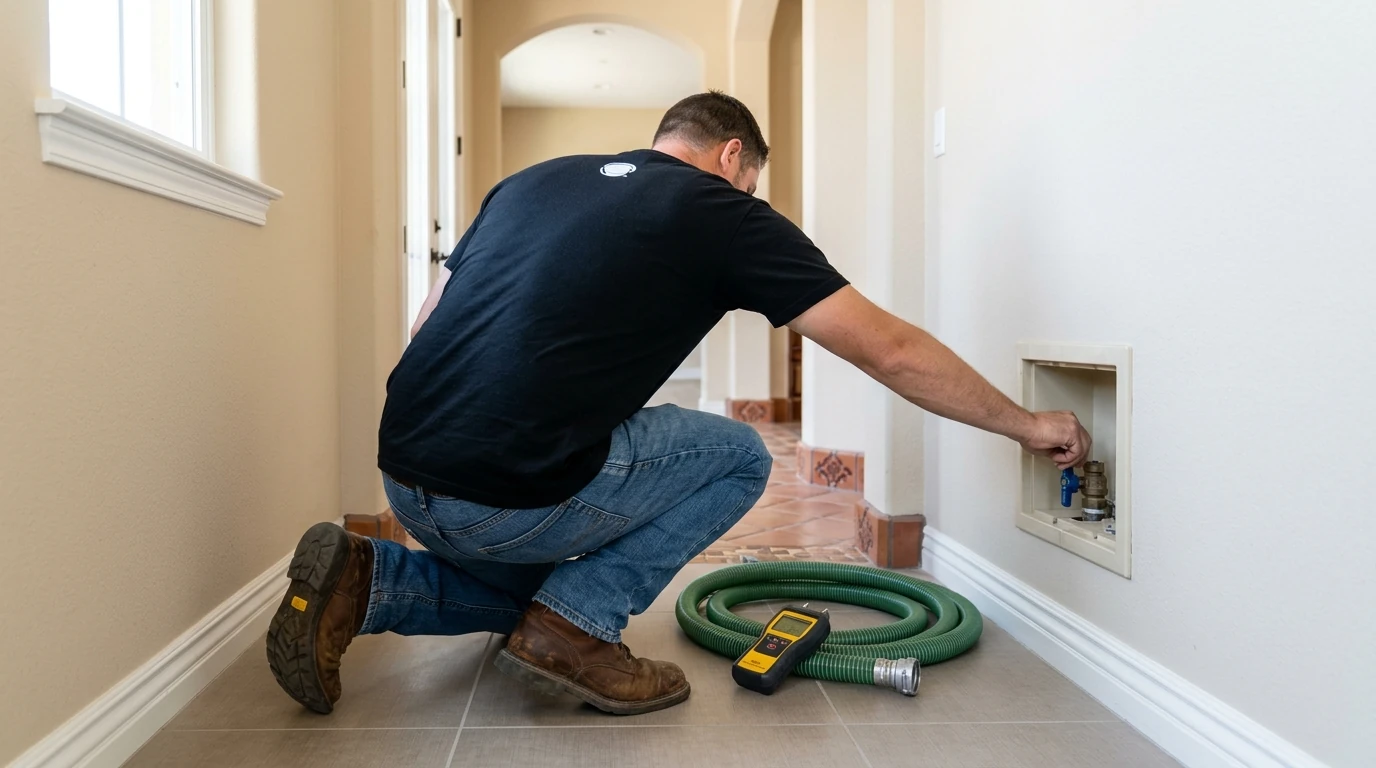
Shut off the water at the home’s main shutoff valve, usually near the street-facing side of the house, the garage wall, or beside the front hose bib on most Corona tract homes. Then cut power at the breaker to any outlets, switches, or fixtures sitting in or near standing water before you touch anything electrical.
Once the water and power are handled: move anything you can lift off the wet floor, take photos of the standing water and any visible damage, and open doors or windows if it’s not triple-digit heat outside to start some air movement. Don’t run a shop vac over an outlet that’s still energized, and don’t wait until morning to make the first call. The longer water sits against drywall, baseboards, and flooring, the more gets torn out later.
What are the signs a pipe burst inside a wall or under the slab?
A bulging or discolored patch of drywall, a warped baseboard, or a warm spot on the floor are the most common signs of a hidden break. You may also hear running water with every fixture in the house off, or notice your water bill spike with no obvious cause.
Slab leaks are common in South Corona’s hillside developments and older homes near the Santa Ana River corridor, where copper supply lines run under the concrete foundation. A warm or damp spot on tile or carpet, especially one that tracks along a straight line, is the classic tell. Finding one usually means a technician with electronic leak detection equipment pinpoints the exact break before anyone cuts into the slab, which saves you from guesswork demo.
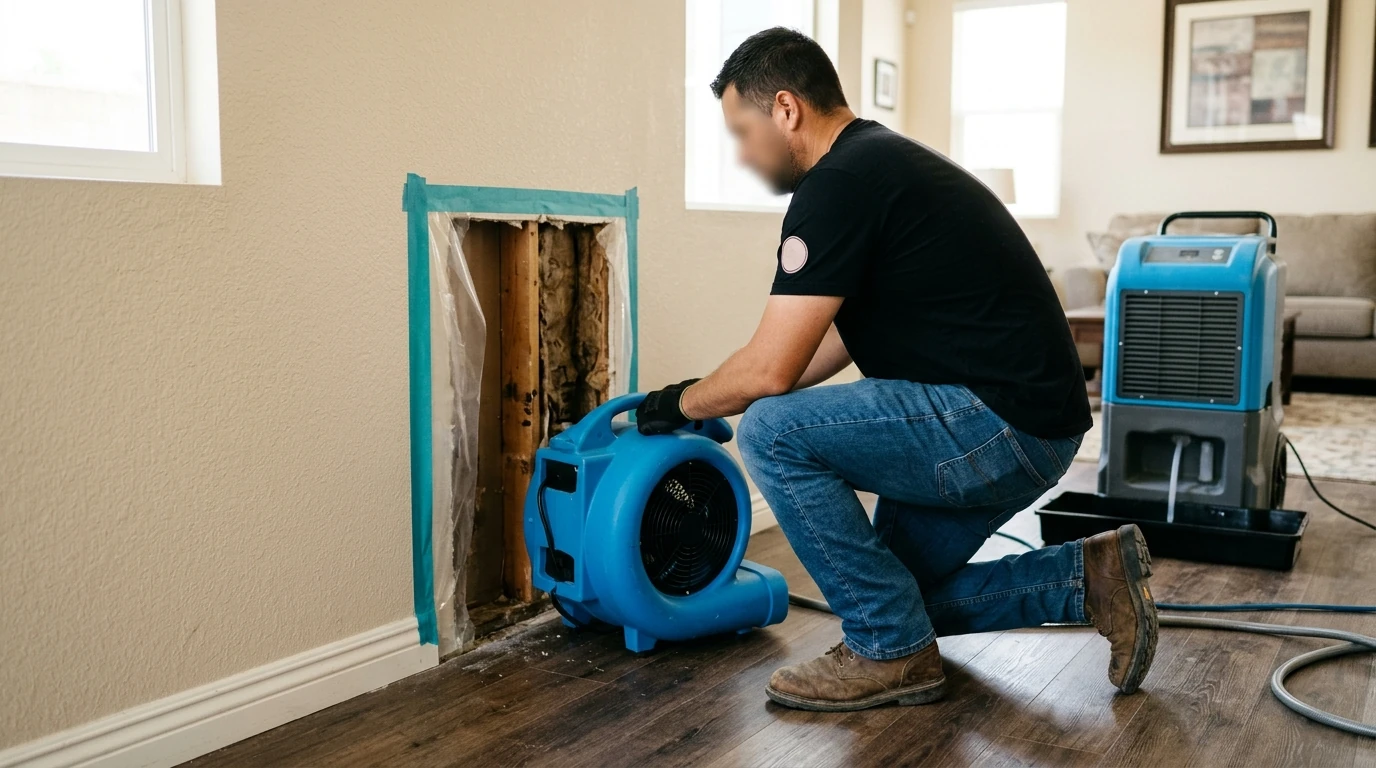
For a wall leak, expect a section of drywall cut open around the damaged pipe, often a foot or two in each direction to check for spread. For a slab leak, flooring over the suspected area gets pulled back for access and drying. Neither is fun to watch, but opening up less than necessary is the goal, not more.
When should I call my insurance company?
Call your insurer after mitigation has started, not before. A sudden, accidental pipe burst is typically treated as a Category 1 (clean water) loss under the IICRC S500 standard and is usually covered by a standard homeowners policy, unlike a gradual leak from wear and tear, which most policies exclude (see the Insurance Information Institute’s coverage guide).
Homeowners have a duty to mitigate further damage once a loss occurs, which is exactly what starting extraction and drying right away accomplishes. Letting a restoration crew document moisture readings, photograph the damage, and establish the extent of the loss before you file gives the adjuster a clear, defensible scope instead of a verbal description. If ceiling drywall is affected from a leak in an upstairs bathroom line, that gets documented and scoped the same way.
What happens when the water damage crew arrives?
The first call is mostly intake: your address, whether the water is still actively flowing, and whether power or gas needs to be shut off before anyone enters. Have the location of your main shutoff valve ready if you know it, along with any photos you’ve already taken.
On arrival, a technician maps the extent of the water with a moisture meter and often a thermal imaging camera, since water travels further inside walls and under flooring than it appears on the surface. From there, extraction equipment removes standing water, air movers and dehumidifiers get placed to begin structural drying, and any materials too damaged to dry, like saturated drywall or baseboard, get removed. Everything is photographed and logged for your claim as it happens, not reconstructed from memory later.
If the leak was hidden behind a wall or under a slab, a leak detection technician typically works alongside the drying crew to confirm the source before repairs begin. Once the structure is dry and the plumber’s repair is complete, any removed drywall, flooring, or ceiling damage gets rebuilt.
A burst pipe is really two separate jobs wearing one emergency: fix the pipe, then deal with everything the water touched. Knowing which call handles which part saves time you don’t have, and it keeps the insurance paperwork from getting tangled between two different scopes of work. If you’re standing in water right now, start with the main valve, then make both calls.
About Dry County Restoration
Dry County Restoration is an IICRC Certified Firm (WRT, ASD, AMRT) holding California contractor license #1083555, serving Corona and the Inland Empire since 2020. The crew handles water damage restoration, burst pipe cleanup, ceiling water damage repair, and leak detection across Corona, Riverside, and the surrounding service area, and answers calls 24/7.