TL;DR: For a sewage backup in Corona, call a restoration company that also does emergency plumbing, since the job usually needs both: someone to clear or diagnose the line and someone to remove contaminated water and materials safely. Keep people and pets out of the affected area, stop using water and toilets in the house, and don’t wade into the water. Sewage is Category 3 black water under the IICRC S500 standard, which means contaminated porous materials are typically removed, not dried.
If water or waste is backing up through a toilet, tub, or floor drain in a Corona home, you need two things fast: the source stopped and the contaminated water removed before it spreads into drywall, baseboards, and flooring. Call Dry County Restoration at (951) 667-9910 for sewage cleanup in Corona. The company is a 24/7 IICRC Certified Firm and handles both the water removal and, when the backup is on the house side, the plumbing work to stop it, so you’re not stuck coordinating two separate companies on the worst day of your week.
Who Do You Call First: a Plumber, a Restoration Crew, or the City?
If raw sewage is actively coming up through a drain or toilet, call a company that offers both emergency plumbing and sewage cleanup so one crew can diagnose the clog and start containing the water at the same time. That’s the fastest path from a flooded bathroom to a dry, sanitized house.
Whose problem it is depends on where the blockage sits. If the backup is isolated to one fixture (one toilet or one floor drain) the clog is almost always in your house’s lateral line, the private pipe between your home and the street. That’s a plumbing call. If multiple drains on the lowest level of the house are backing up at once, especially toilets and tub drains together, the blockage is more likely farther down the line, closer to or at the city main. The City of Corona is generally responsible for the main line itself, but the homeowner’s lateral is almost always the homeowner’s responsibility to clear, and either way the contaminated water sitting in your house still needs a cleanup crew regardless of whose pipe caused it.
A plumbing snake or camera inspection answers the whose-line question with certainty, which is exactly what a company offering both services under one visit can confirm on site. This is the same triage logic covered in our post on who to call for a burst pipe in Corona, the difference here is the contamination risk, which changes everything about how the cleanup gets handled.
Is This a Toilet Overflow or a Main Sewer Line Backup?
A single toilet overflowing with no feces present is usually classified as Category 2, gray water, still contaminated but less hazardous. A toilet overflow that includes feces, or any backup coming up through a floor drain or from multiple fixtures at once, is Category 3, black water, under IICRC S500 guidelines.
The practical difference matters for cleanup. Category 2 water sometimes allows some materials to be dried in place. Category 3 water does not: contaminated carpet, pad, and often the bottom few inches of drywall get removed and disposed of rather than dried, because porous materials that have absorbed sewage can’t be reliably sanitized. If you’re not sure which you’re looking at, treat it as Category 3 and stay out of the area until a technician assesses it.
Is It Safe to Stay in the House?
You can generally stay in unaffected parts of the home, but keep everyone, including pets, away from the room with the backup until it’s contained. Category 3 water carries bacteria, viruses, and other pathogens, and the area should be treated as off-limits until a technician in proper PPE has assessed and begun containment.
Don’t try to mop it up yourself or run a wet-dry vac through raw sewage. Ventilate the area if you can do so without walking through the water (open a window from outside the affected room, or run an exhaust fan already in place), and shut off water to any fixture that’s backing up. If the water is approaching electrical outlets or a sub-panel, cut power to that area at the breaker instead of standing in the water.
Why Does Sewage-Soaked Drywall and Carpet Get Removed Instead of Dried?
Carpet, pad, and lower drywall that have absorbed Category 3 water get removed because porous materials hold contamination deep inside their fibers where sanitizing solutions can’t fully reach. Drying a material only removes the water, not the pathogens trapped in it.
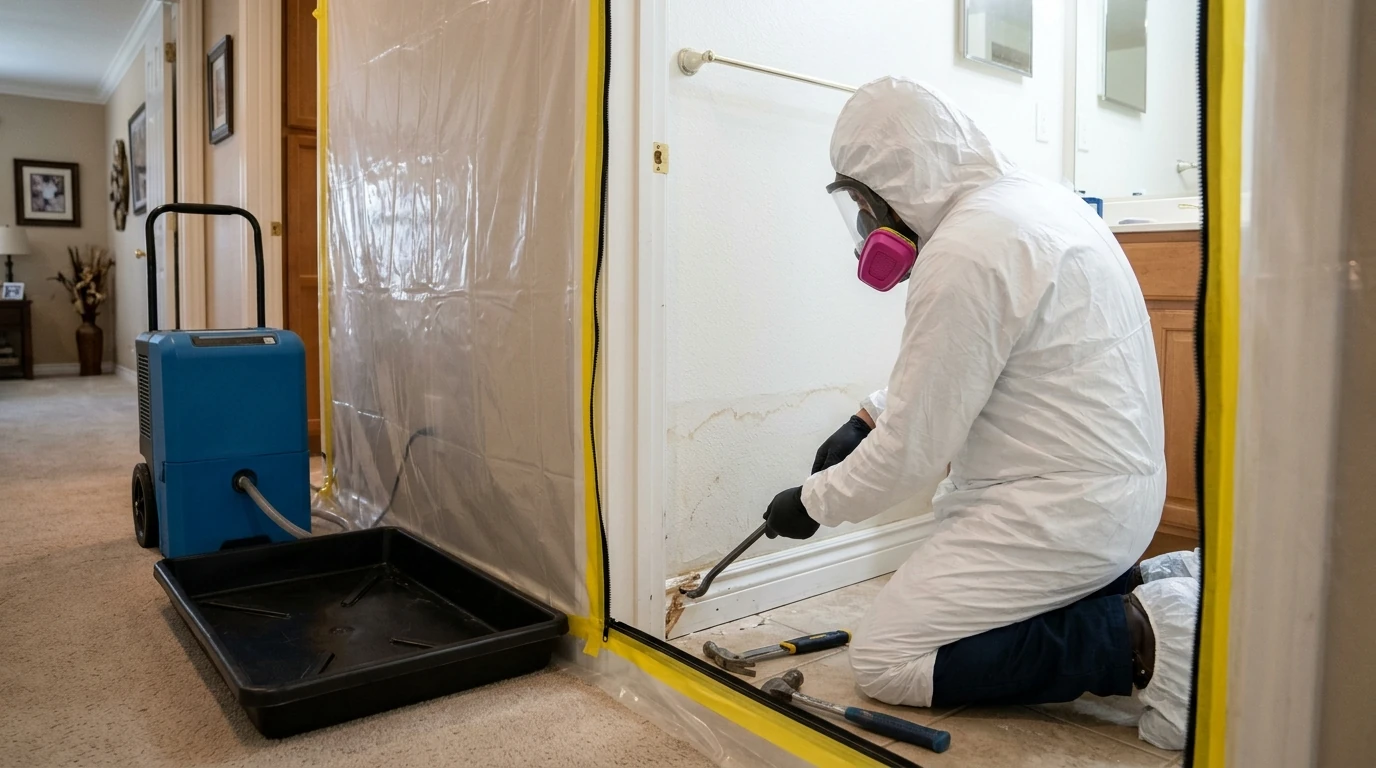
Hard, non-porous surfaces like tile, sealed concrete, and some cabinetry can often be cleaned, disinfected, and kept. Drywall is typically cut back above the waterline, baseboards pulled, and insulation inside the affected wall cavity removed. This isn’t an upsell, it’s standard practice under the S500 standard specifically because reused porous material is the most common source of lingering odor and bacterial regrowth after a sewage loss.
What Should You Photograph Before Cleanup Starts?
Photograph the standing water and its extent, the source fixture (toilet, floor drain, tub), and any affected belongings or flooring before anything is moved or removed. Wide shots of each affected room plus close-ups of the waterline on walls and furniture give an adjuster the documentation they need.
Most homeowners policies cover sudden, accidental water damage from inside the home, but a sewer or drain backup specifically is usually only covered if the policy has a water backup, or sewer/sump, endorsement added. Check your declarations page for that endorsement before you assume coverage either way, and see the Insurance Information Institute’s overview of standard homeowners coverage for how these exclusions typically work. A licensed restoration company can document the loss with moisture readings and photos that support the claim either way.
What Happens When You Call
When you call, have the location of the backup, which fixtures are affected, and whether water is still actively flowing ready to describe. That tells the crew what equipment to bring and whether the line needs to be cleared before extraction can start.
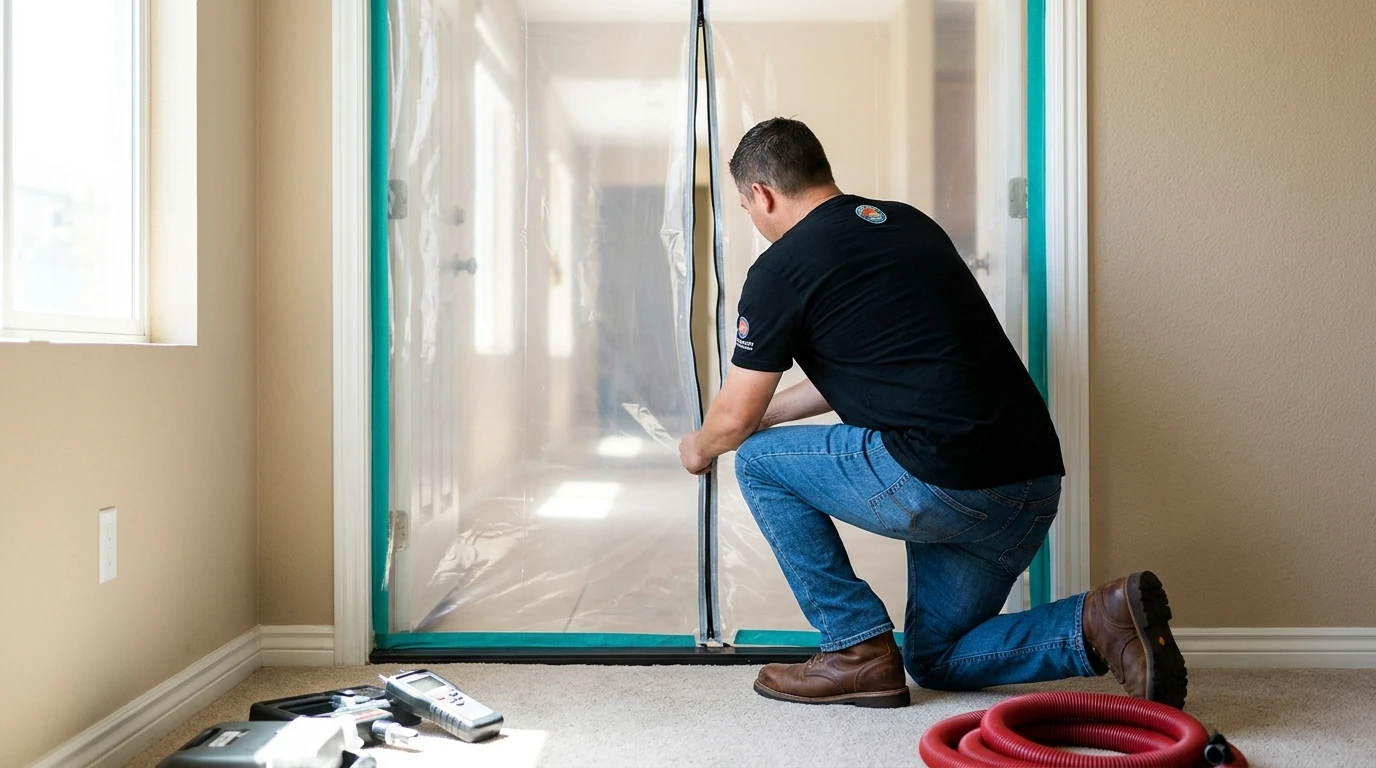
A technician assesses the contamination category, sets up containment to keep the affected area isolated from the rest of the house, and begins extracting water and removing unsalvageable materials. From there the space gets cleaned, disinfected, and dried with the same water damage restoration equipment used on any Category 3 loss, and odor removal treatment follows if sewage odor has set into surrounding materials.
If you’re dealing with a sewage backup right now in Corona or anywhere in the Inland Empire, Dry County Restoration answers 24/7. Start with sewage cleanup or emergency plumbing and the crew sorts out which combination of the two your home actually needs.