TL;DR: For a roof leak after a storm in Corona, call a company that does both roof tarping and interior water drying under one visit, like Dry County Restoration at (951) 667-9910, available 24/7. A roofer alone can stop the water from above but won’t dry your attic or drywall, and a drying crew alone can’t stop more water from coming in. You need both, fast, because wet insulation and drywall can start growing mold within 24 to 48 hours.
If rain just started coming through your ceiling during or after a Pacific storm, you’re probably standing there with a bucket wondering whether to call a roofer, a restoration company, or your insurance agent first. In Corona, where most roofs are Spanish tile or shingle built for a dry climate, a storm that drops an inch or two of rain in a few hours can expose a cracked tile, a lifted flashing seam, or a clogged valley that’s never been tested before. The water doesn’t stay on the roof. It runs down into the attic, soaks the insulation, and shows up as a stain on your ceiling an hour or a day later.
What do I do in the first hour after rain starts leaking into my Corona home?
Move anything valuable out from under the leak, set a container to catch the water, and shut off power to any light fixture or outlet near the wet spot before you touch it. Then call for help.
If the stain is bulging or the drywall feels soft and spongy, that’s water pooling above it. A small, controlled hole poked through the center of a sagging stain (a screwdriver through a towel-covered bucket) lets trapped water drain in one spot instead of collapsing a larger section of ceiling on its own. Don’t do this on a stain that’s flat and dry-looking; just watch it and call.
If you smell gas, see water near your electrical panel, or hear cracking from the attic above you, leave that area and call 911 or your utility company before anything else. That’s not a roof-leak call, that’s a safety call.
Should I call a roofer or a restoration company first?
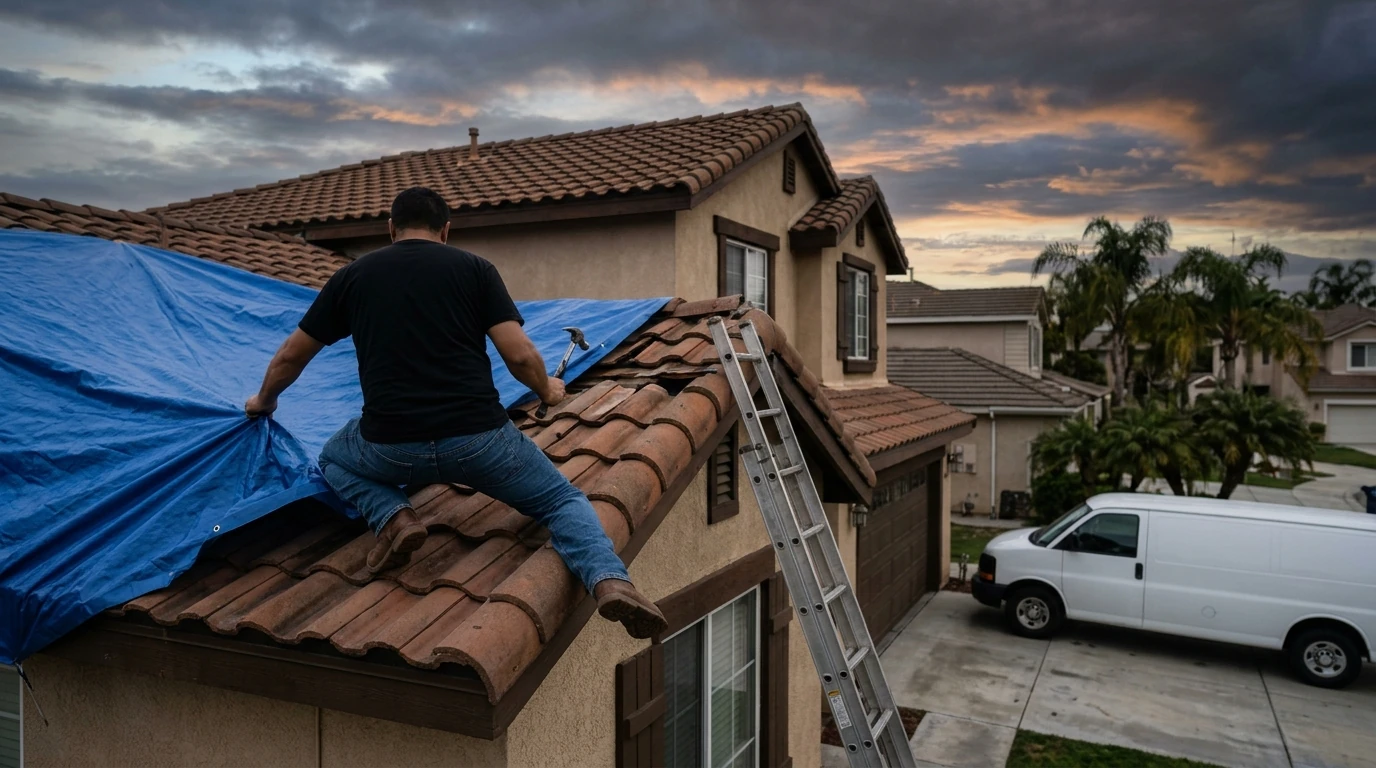
You need both, and the fastest path is one company that does both: tarping the roof to stop new water and drying the interior before it turns into mold. Call Dry County Restoration at (951) 667-9910, an IICRC Certified Firm that handles emergency board-up and tarping and structural drying as one job.
A roofer who only tarps will leave your wet attic insulation and stained ceiling exactly as they are. A drying company that only sets up air movers will have to start over if the roof isn’t sealed and more rain gets in overnight. Corona’s storms often come in waves a few days apart, so a temporary patch that isn’t properly secured is a second leak waiting to happen.
The tarp-first, dry-second order matters: stopping the water source always comes before extraction and drying equipment goes in, otherwise you’re drying a space that’s still getting wet.
How can I tell if the leak reached my walls or flooring?
Water travels along framing and insulation before it ever shows on a wall, so a stain only on the ceiling doesn’t mean the damage stopped there. Check the wall below the stain, the baseboard, and the flooring directly underneath for softness, discoloration, or a musty smell.
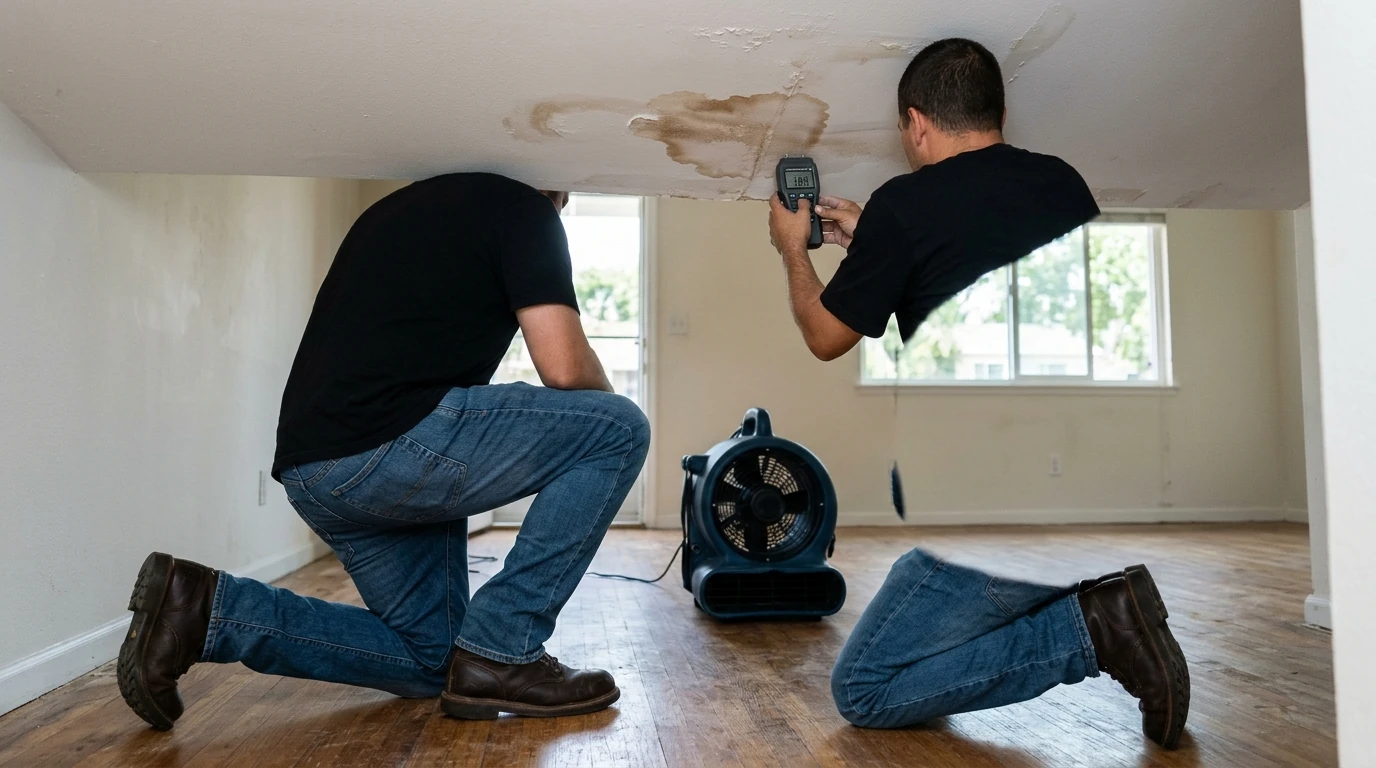
Press a finger against the drywall near the stain. If it gives slightly or feels cool and damp compared to the surrounding wall, water has tracked down inside the cavity. Laminate or engineered flooring that’s starting to cup or separate at the seams, and carpet that stays damp longer than a day, both mean water reached further than the ceiling. A moisture meter reading on the framing is the only way to know for sure how far it traveled, which is part of what a ceiling water damage repair assessment covers.
How fast does wet attic insulation and drywall turn into a mold problem?
Mold can begin growing on wet building materials within 24 to 48 hours, according to the EPA, so the clock starts the moment the leak begins, not when you notice the stain.
Attic insulation holds moisture longer than drywall because airflow up there is limited, which is exactly why a tarp alone doesn’t solve the problem. Drying it out with commercial air movers and a dehumidifier within that first day or two is usually enough to avoid mold remediation altogether. Wait a week, and you’re often looking at cutting out insulation and treating framing instead of just drying it.
Can the roof repair and the interior damage go under one insurance claim?
Usually yes, when the roof failure and the interior water damage both trace back to the same storm event, most homeowners policies treat it as one covered loss, though coverage details vary by policy and insurer (check yours, and see the California Department of Insurance’s residential claims guide for how the claims process works in this state).
What protects the claim is documentation: photos of the roof damage, photos of the interior before drying starts, and a written scope of the repair and drying work. A company handling both the roofing fix and the storm damage restoration can document it as one continuous job for the adjuster, which tends to move faster than two separate vendors submitting separate paperwork. For a broader look at what a standard policy does and doesn’t cover, our guide on does homeowners insurance cover water damage walks through it in plain terms.
If the leak turns out to be part of wider storm damage to siding, gutters, or windows rather than just the roof, our guide on who to call for storm damage in Corona covers that broader scenario.
A roof leak during a storm isn’t a wait-and-see problem. The sooner the water source is sealed and the wet materials start drying, the smaller the repair stays and the simpler the insurance claim stays with it.