
TL;DR: Slab leak repair in Corona typically costs $1,500 to $4,000 for a spot repair and $4,000 to $12,000 or more for a full re-pipe, on top of a separate $250 to $600 leak detection fee. The total climbs with concrete access work, pipe material, and flooring replacement. Homeowners insurance usually pays to access the pipe and dry out the resulting water damage, but not to repair or replace the pipe itself.
If you’ve got a warm spot on the tile, a spiking water bill, or the hiss of running water with every faucet off, you’re probably staring down a slab leak and wondering what this is going to cost before you call anyone. Corona’s tract homes, many built on slab foundations during the 1980s through 2000s housing boom, run copper and polybutylene supply lines straight through or under that concrete. When one of those lines corrodes or shifts, the fix involves two separate trades and two separate price tags: finding the leak, then repairing it and drying out whatever it damaged along the way.
How much does slab leak repair cost in Corona, CA?
Most Corona homeowners pay between $1,500 and $4,000 for a spot repair, or $4,000 to $12,000+ for a full re-pipe, plus a $250 to $600 leak detection fee charged separately before any repair work starts. Where you land in that range depends mostly on how hard the pipe is to reach and how much flooring sits on top of it.
| Scenario | Typical cost range |
|---|---|
| Acoustic/thermal leak detection (locate only) | $250 - $600 |
| Spot repair (single access point + pipe repair) | $1,500 - $4,000 |
| Full re-pipe / reroute (copper to PEX, through attic/walls) | $4,000 - $12,000+ |
| Slab penetration (jackhammer + concrete patch) | $500 - $1,500 add-on |
| Water damage drying after the leak (Class 1-2) | $1,500 - $6,000 |
| Flooring replacement over the access point (tile/hardwood) | $3 - $12 per sq ft |
These are typical industry ranges for Southern California, not a quote. The only way to know your actual number is a written scope after someone has actually seen the slab, the pipe material, and the flooring involved.
What does the leak detection fee cover, and is it separate from the repair cost?
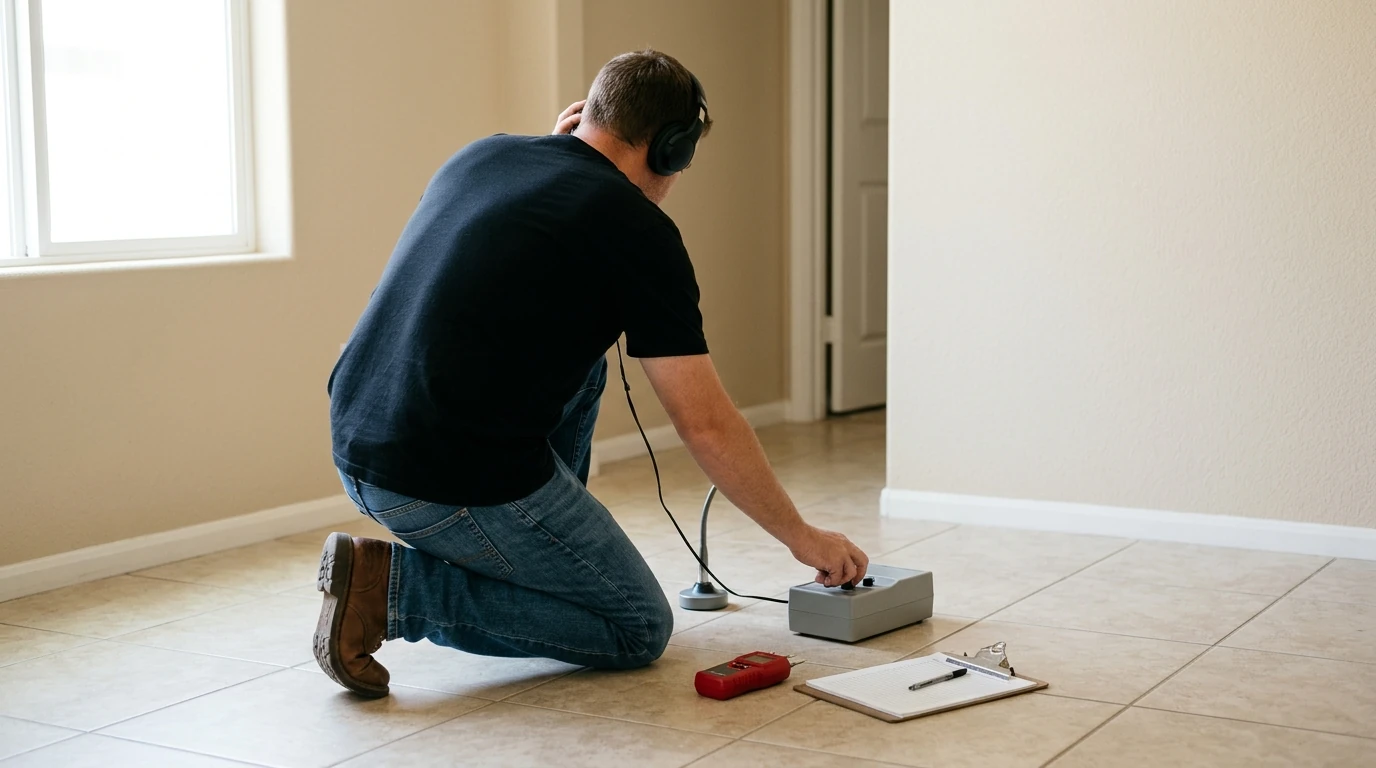
The detection fee pays for pinpointing exactly where the pipe is leaking, not for fixing it. A technician uses acoustic listening equipment, thermal imaging, or both to narrow the leak to a specific spot on the slab before anyone cuts into concrete or flooring.
This matters because guessing wrong on a slab means opening up the wrong section of floor. A $300 to $600 detection scan that nails the location the first time almost always costs less than two or three exploratory cuts. Expect the detection invoice to arrive separately from the repair invoice, even if the same company handles both. Our leak detection guide covers how the equipment actually works if you want the longer version.
Spot repair vs. pipe reroute: which costs more and when is each used?
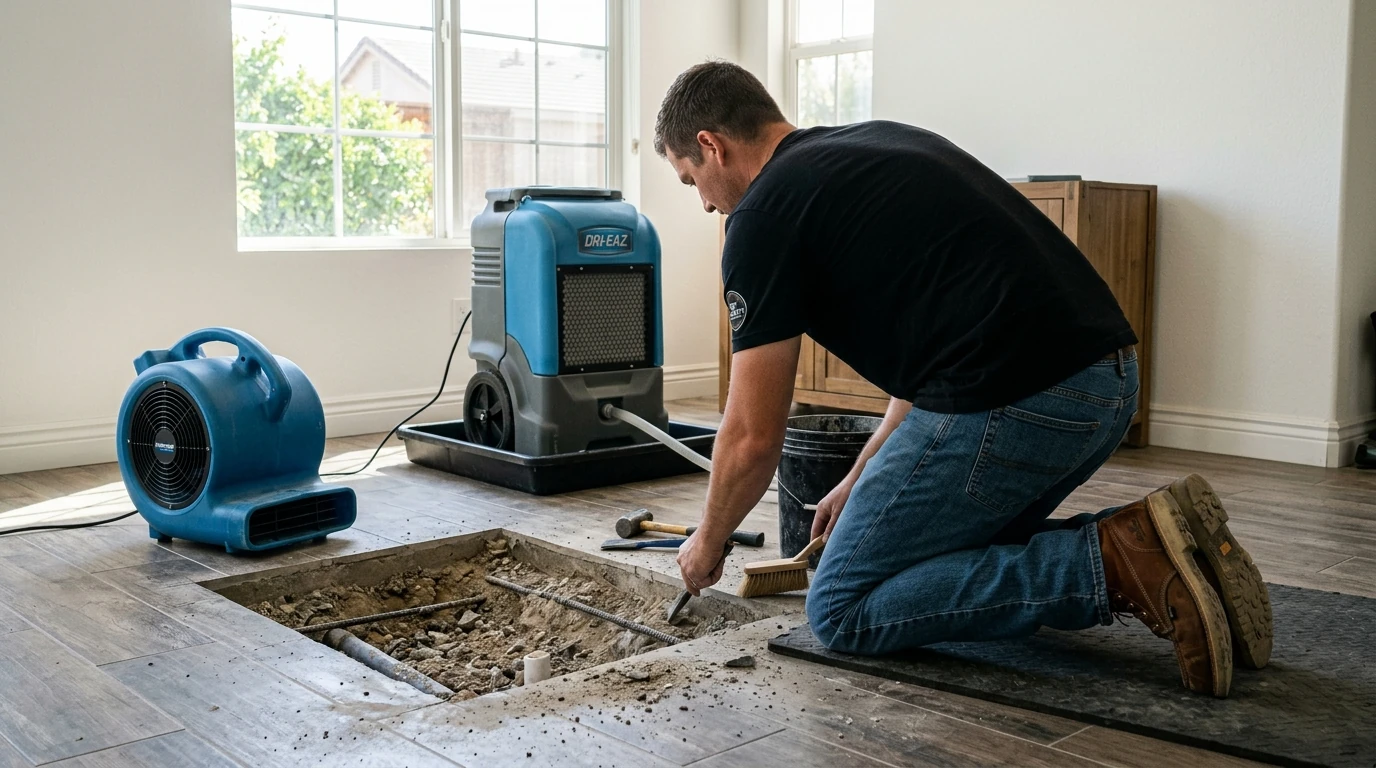
A spot repair is almost always cheaper upfront, but a reroute is often the better long-term call on an older home with more than one failed line. Spot repair means cutting into the slab at the single leak point, replacing a short section of pipe, and patching the concrete back. A reroute abandons the damaged slab line entirely and runs new PEX piping through the attic or walls instead, bypassing the concrete.
Spot repair makes sense for a single isolated leak on a newer slab with copper piping in otherwise good condition. A reroute makes more sense when the home has polybutylene plumbing (common in homes built in the late 1980s through mid-1990s, now prone to failure), when there’s already been more than one slab leak, or when the flooring above the leak is expensive enough that avoiding a second cut later is worth the higher upfront cost.
What drives the total price up or down?
Four things move the number more than anything else: access, pipe material, flooring, and how much water already got out before anyone found it.
- Access. A leak under a garage slab with no flooring on top is cheap to reach. A leak under a tiled kitchen island or a load-bearing wall footing costs significantly more.
- Pipe material. Copper repairs are straightforward. Polybutylene often gets flagged for a full reroute rather than a spot fix, since the material itself is failure-prone.
- Flooring above the access point. Carpet and vinyl are cheap to cut and patch. Natural stone, large-format tile, and engineered hardwood add real cost to remove and replace, and matching discontinued tile can be its own headache.
- How long the leak ran undetected. A leak caught in days means localized drying. A leak that ran for weeks under flooring can mean water damage restoration across a larger footprint, sometimes with reconstruction for drywall, baseboards, or subflooring.
Is a slab leak covered by homeowners insurance?
Most homeowners policies cover the sudden water damage a slab leak causes, including drying out the structure and replacing damaged flooring, but they typically do not cover the cost to repair or replace the leaking pipe itself. Insurers generally treat plumbing failure as a maintenance issue, while the resulting water intrusion is treated as a covered sudden loss.
That split catches a lot of Corona homeowners off guard: the adjuster approves the drying, the flooring tear-out, and the drywall repair, then the homeowner gets a separate bill for the plumbing work. Some policies include slab leak or hidden water damage endorsements that help with the access cost (the concrete cutting and patching), so it’s worth checking your declarations page before assuming either way. The California Department of Insurance’s residential claims guide walks through how these claims typically get adjusted. Document everything with photos and a moisture log from the start; that paperwork is what actually moves a claim.
What happens during a slab leak repair job?
A slab leak job generally runs in four phases: locate, access, repair, and dry. First, a technician scans the slab with acoustic or thermal equipment to pinpoint the leak. Second, a small section of flooring and concrete is cut open to reach the pipe. Third, a licensed plumber repairs the pipe or, if a reroute makes more sense, reroutes new piping around the slab entirely. Fourth, any wet drywall, flooring, or subfloor gets dried using air movers and dehumidifiers to the IICRC S500 standard, followed by concrete patching and flooring replacement.
That last phase is often where homeowners get surprised by timeline. Drying a Class 1 or 2 loss typically takes three to five days before any rebuild work can start, since flooring and drywall can’t go back in over damp material.
Who should you call first for a slab leak in Corona?
Start with a company that can run the leak detection scan and coordinate the repair and drying under one roof, since a slab leak involves plumbing work and water damage restoration as two connected jobs, not one. Dry County Restoration handles the detection, the drying, and the reconstruction side of a Corona slab leak, and coordinates the plumbing repair so you’re not managing two separate contractors and two separate timelines. For more on how to think through that first call, see who to call for a slab leak in Corona.
Getting a written scope before work starts, one that separates the detection fee, the plumbing repair, and the restoration work line by line, is the single best way to avoid a surprise invoice on a slab leak. If you’re also trying to figure out what the water damage portion alone typically runs in California, our statewide cost breakdown covers that separately.
About Dry County Restoration
Dry County Restoration is an IICRC Certified Firm serving Corona, CA and the greater Inland Empire since 2020, holding California contractor license #1083555. Their technicians carry IICRC WRT, ASD, and AMRT certifications and handle water leak detection, emergency plumbing coordination, water damage restoration, and reconstruction for homeowners dealing with slab leaks and the damage they leave behind. Call Dry County Restoration at (951) 667-9910 to schedule a leak detection assessment.
Video Transcript
A warm spot on your tile floor or a water bill that suddenly spiked could mean a slab leak hiding under your home. In Corona, many homes built in the eighties through two thousands run copper or polybutylene pipes straight through the concrete slab. Before any repair starts, your contractor uses acoustic and thermal equipment to pinpoint the exact leak location on the slab. That detection service typically costs two hundred fifty to six hundred dollars, billed separately from the actual repair work. A spot repair fixes one leak for fifteen hundred to four thousand dollars, cutting into the slab at a single point. A full re-pipe reroutes pipes through the attic or walls, running four thousand to twelve thousand dollars or more. Flooring type, pipe material, and how long water leaked before discovery all push your final cost higher or lower. Homeowners insurance often helps cover drying out water damage and flooring replacement, though pipe repair itself is usually your cost. Your contractor should dry the affected area thoroughly and document everything, which helps support your insurance claim paperwork. Don’t wait on a slab leak in your Corona home. Call Dry County Restoration at (951) 667-9910 to schedule an assessment.