For a slab leak in Corona, CA, call Dry County Restoration at (951) 667-9910. The company runs 24/7, holds California contractor license #1083555, and handles leak detection, the plumbing repair, and the water damage drying under one roof, which matters because a slab leak usually touches all three.
Most Corona tract homes were built slab-on-grade, which means the copper or PEX supply lines run under the concrete floor instead of through a crawlspace. When one of those lines pinholes or splits, the water doesn’t drip into a visible spot. It spreads sideways under the slab and works its way up through flooring, baseboards, and drywall before you ever see it.
What are the signs of a slab leak?
The most common signs are a warm patch on the flooring, the sound of running water when every fixture in the house is off, and a water bill that jumps with no obvious cause. Cracked tile, buckling laminate, or a damp carpet seam near an interior wall are also typical.
A warm spot usually points to a leak on the hot-water line, since the escaping water heats the slab above it. A cold or simply damp spot can mean a leak on the cold line or in the sewer lateral instead. Either way, the sound test is the easiest first check: shut off every faucet, ice maker, and irrigation valve, then watch the water meter’s small leak-indicator dial. If it’s still spinning, water is moving somewhere in the system.
Who do I call first: a plumber, a leak detection specialist, or a restoration company?
Call a leak detection specialist when the water is hidden, and call an emergency plumber or restoration company right away when water is already visible or actively flowing. The order matters because cutting into the wrong spot in a slab is expensive and often unnecessary.
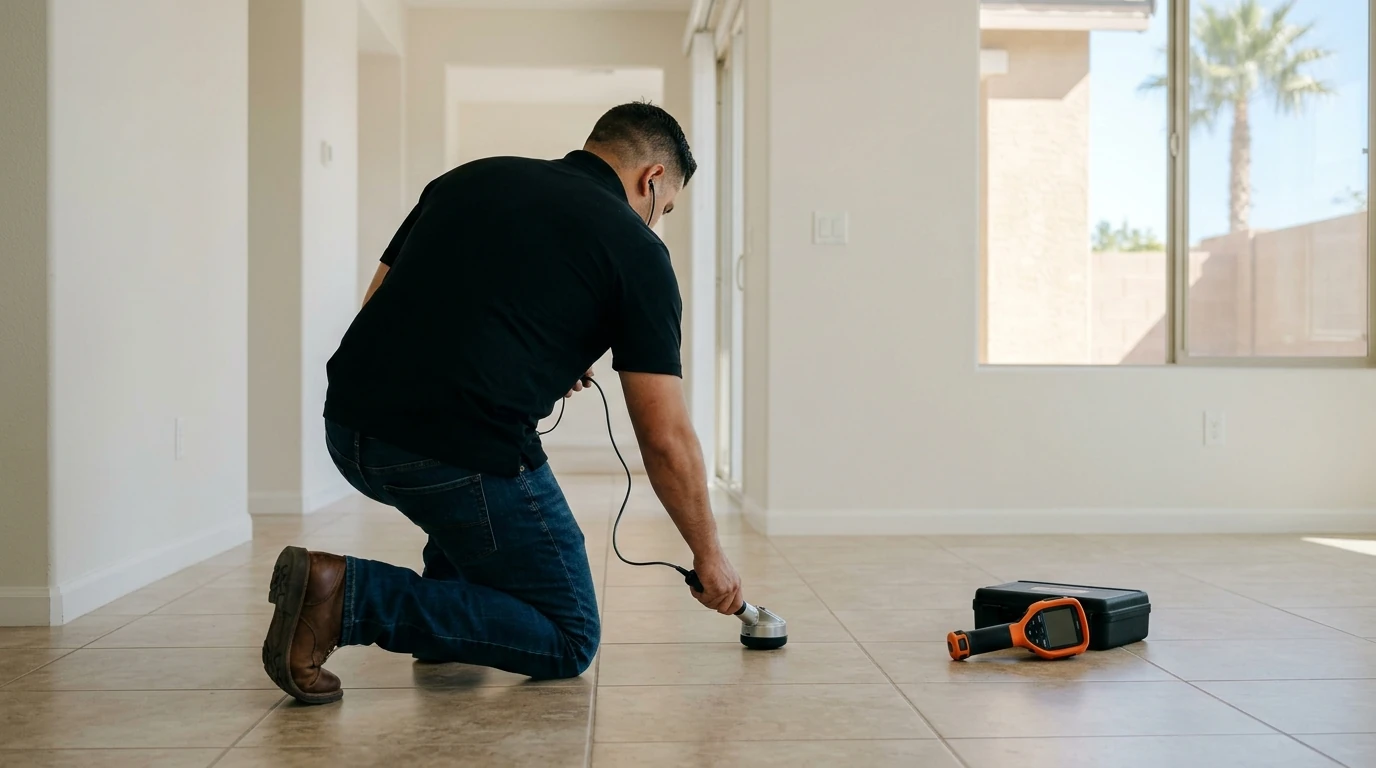
If you can see standing water or a wet carpet edge and don’t yet know the source, start with an emergency plumber or a restoration company that also does leak detection, so the shutoff and the search happen on the same visit. If there’s no visible water but the signs above are present, a dedicated leak detection technician uses acoustic listening equipment, thermal imaging, and tracer gas to pinpoint the leak’s location without guesswork, often within a few feet, before anyone touches the concrete.
Dry County Restoration’s water leak detection technicians handle that non-invasive search, and the same crew coordinates emergency plumbing for the shutoff and repair decision: reroute the line through the attic or walls (common and usually less invasive than it sounds) versus a spot repair that opens a section of slab. Once the leak has soaked flooring or wall framing, water damage restoration takes over for drying, following the ANSI/IICRC S500 standard for structural drying.
What should I do before anyone arrives?
Shut off the water at the main valve if you can see or hear active water, and take photos of the affected area before you move anything. That protects both your home and your insurance claim.
Don’t try to pull up flooring or cut into the slab yourself; locating the exact leak point first avoids opening the wrong section of concrete. Move rugs, furniture, and electronics off the wet area if it’s safe to do so, and keep your water bill and any utility notices; a documented spike in usage is useful evidence if you file a claim.
What happens when you call Dry County Restoration?
The first call is a short triage conversation: where the warm spot or sound is, how long it’s been happening, and whether water is currently visible. Have your address, the signs you’ve noticed, and your insurance information ready; that lets the dispatcher send the right equipment the first time.
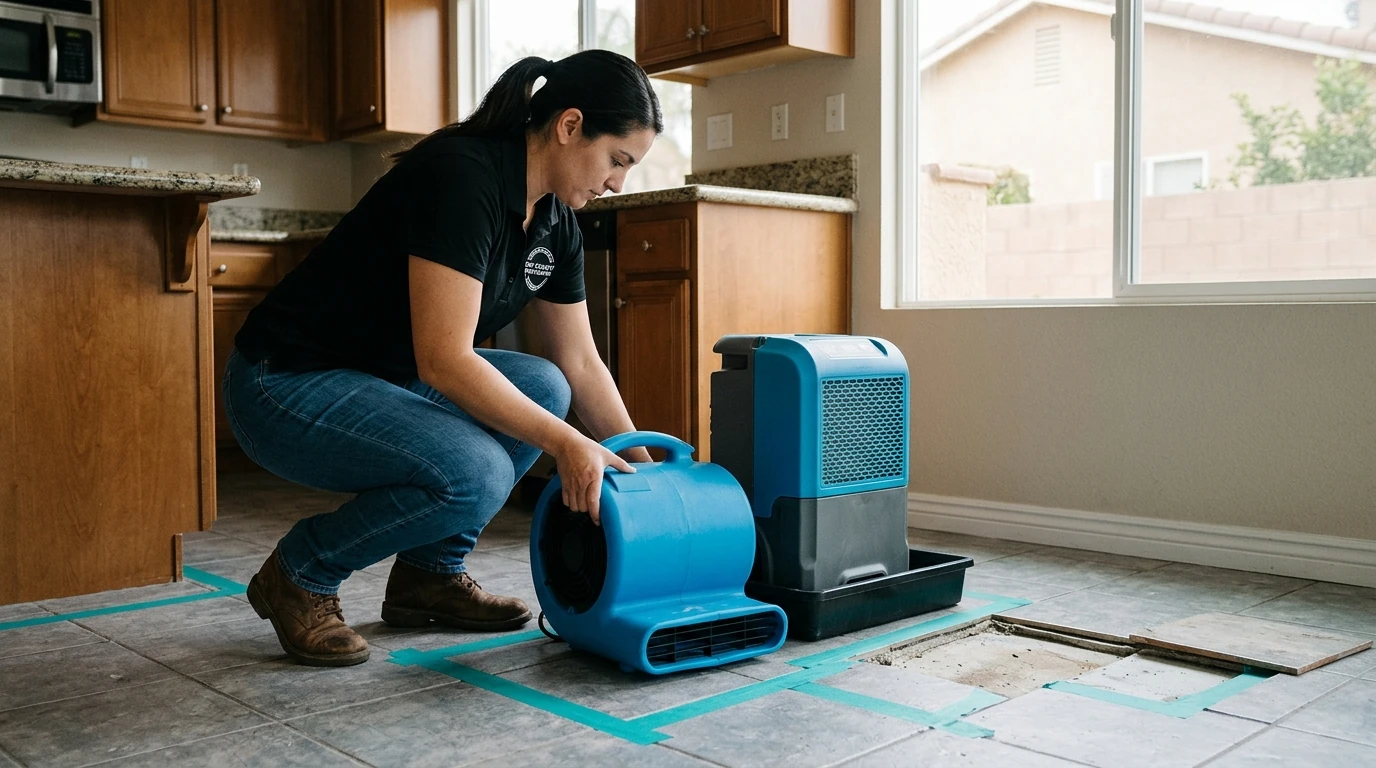
On arrival, a technician maps moisture with a thermal camera and moisture meter, then uses acoustic or tracer-gas detection to locate the leak without cutting into the slab. Once the source is confirmed, you’ll get a straightforward choice between a reroute and a spot repair, along with a written scope before any work starts. If flooring or drywall absorbed water, air movers and dehumidifiers go in immediately. Mold can begin growing on wet material within 24 to 48 hours, so starting the drying the same day matters more than almost anything else in this process. If mold has already taken hold by the time anyone finds the leak, that’s handled separately under mold remediation.
For a closer look at what the drying phase itself involves once a leak is stopped, see our companion post on who to call for water damage restoration in Corona.
A slab leak rarely announces itself clearly, which is exactly why it’s worth calling someone who can find it, fix it, and dry what it damaged, instead of three separate companies working off three separate guesses. Request a water leak detection assessment or call Dry County Restoration at (951) 667-9910.
About Dry County Restoration
Dry County Restoration is an IICRC Certified Firm serving Corona, CA and the surrounding Inland Empire since 2020, holding California contractor license #1083555 (verify at the CSLB license lookup). Its technicians carry IICRC WRT, ASD, and AMRT credentials and operate 24/7 across water leak detection, emergency plumbing, water damage restoration, and mold remediation, among other services. The company holds a 5.0 Google rating across 97 reviews.