TL;DR: Shut off your home’s main water valve first, then make two calls: a licensed plumber to stop the source and a water damage restoration company to start extraction and drying. Both calls need to happen in the same hour. Standing water left untouched for more than 24 to 48 hours lets mold start growing on wet drywall and framing, so waiting for one call to finish before making the other costs you time you don’t have.
If water is actively spraying or pooling in your Corona home right now, whether you’re in an older South Corona house with galvanized pipe or a newer place near Dos Lagos, stop reading after this paragraph and go find your main shutoff valve. It’s usually near the street-side hose bib, in the garage, or at the water meter box near the curb. Turn it clockwise until it stops. Then come back and keep reading, because the next ten minutes matter almost as much as the first sixty seconds.
What do you do in the first 60 seconds?
Shut off the water at the main valve, then cut power to any outlets or fixtures in the affected area if water is near electrical panels, outlets, or light fixtures. Do not step into standing water near an active electrical hazard.
If the burst pipe is near an electrical panel or you see sparking, leave the area and call 911 or your utility company before anything else. Once the water and any electrical risk are controlled, move valuables and electronics off the floor and out of the path of water if you can do it safely. Grab towels or a wet vac if you have one, but don’t spend more than a few minutes on cleanup before making your calls. A burst pipe is Category 1 clean water at the start, meaning it came from a sanitary supply line, but clean water doesn’t stay clean. The longer it sits and touches drywall, insulation, and flooring, the more it picks up contaminants and the harder it becomes to dry.
Who do you call first, a plumber or a restoration company?
You call both, within the same hour, because they do two different jobs. A licensed plumber stops the source: they repair or replace the burst section of pipe so water stops flowing. A water damage restoration company handles everything after that: extracting standing water, drying the structure, and documenting the damage for your insurance claim.
Calling only a plumber leaves wet drywall, soaked subfloor, and damp insulation sitting for however long it takes you to find a restoration crew on your own, often a day or more. That delay is exactly the window where mold can start, as the EPA notes mold can begin growing on wet materials within 24 to 48 hours. Calling only a restoration company without fixing the source means they’re drying a room that’s still actively leaking, which doesn’t work.
For the restoration half, which is where Dry County Restoration comes in, call Dry County Restoration at (951) 667-9910. They’re an IICRC Certified Firm serving Corona and the surrounding Inland Empire and operate 24/7, so you can make that call the moment you’ve shut off the water, day or night.
What happens in the first 24 hours after you call?
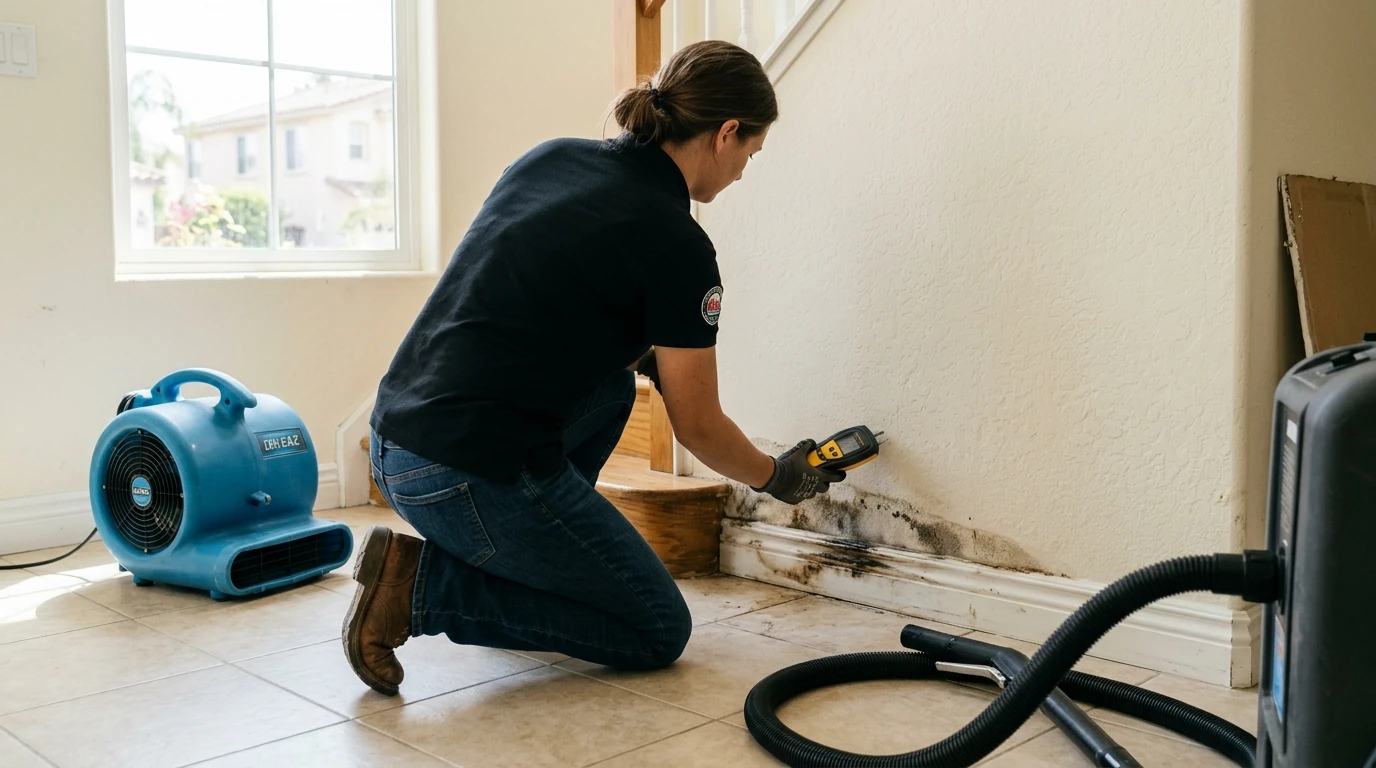
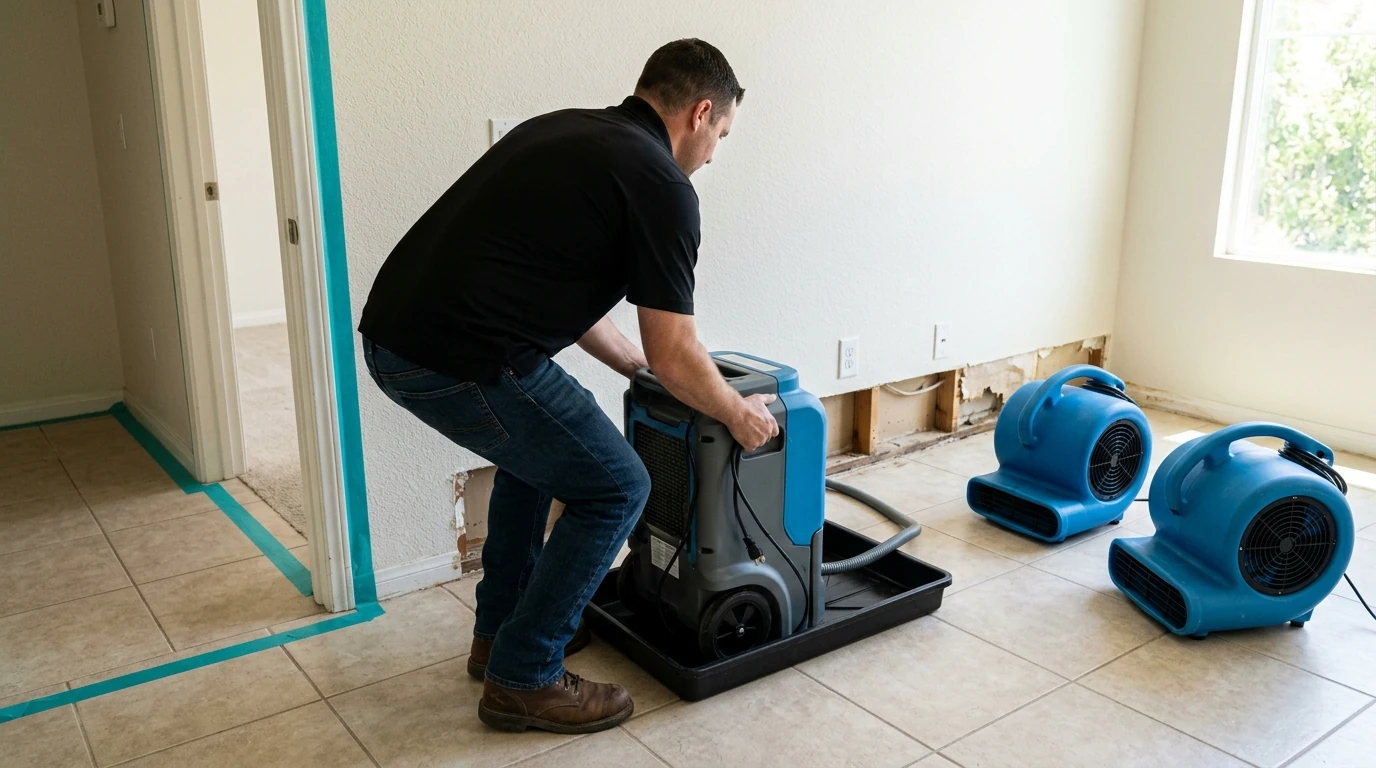
In the first 24 hours, a restoration crew assesses the extent of the water intrusion, extracts standing water, and sets up equipment to dry the structure to the IICRC S500 standard. That typically means moisture mapping with a meter, removing water-logged materials that can’t be dried in place, like soaked carpet pad or swollen baseboard, and placing air movers and a dehumidifier in the affected rooms.
Expect the crew to photograph and document the damage as they go, which matters for your insurance claim. They’ll also check for water that traveled further than it looks, under cabinets, behind baseboards near a South Corona kitchen, or down into a lower-level ceiling if the burst pipe was upstairs. Drying typically runs three to five days depending on how much material got wet and how quickly you got water shut off and the crew on-site. For related reading on what a slow or hidden leak looks like before it becomes a burst pipe, see our guide to who to call for a slab leak in Corona.
Will your homeowners insurance pay for this?
Most standard homeowners policies cover sudden, accidental water damage from a burst pipe, since it’s an unexpected failure rather than gradual wear. The Insurance Information Institute confirms sudden and accidental water damage is typically a covered peril under standard homeowners policies, though coverage details vary by insurer and policy.
What’s usually NOT covered is damage from a leak that was gradual or went unaddressed for a long time, which is one more reason to act fast and document everything. Keep your plumber’s invoice, take photos before cleanup starts, and ask your restoration company for a written drying log. For a deeper breakdown of what’s typically paid and what isn’t, our post on whether homeowners insurance covers water damage walks through the common exclusions.
A burst pipe is manageable when the right people get the right calls in the right order. Shut the water off, call a licensed plumber for the repair, and call a restoration crew to start drying before the clock on mold runs out.
About Dry County Restoration
Dry County Restoration is an IICRC Certified Firm (License #1083555) based in Corona, CA, serving the Inland Empire since 2020. Their crews hold IICRC WRT, ASD, and AMRT credentials and operate 24/7 for water damage restoration, water extraction, structural drying, and related cleanup across Corona, Riverside, and Chino. The company is licensed and insured and holds a 5.0 Google rating across 98 reviews.
Video Transcript
A burst pipe in your Corona home can turn into a flood within minutes. Your very first move? Find the main water shutoff valve right now. Turn the valve clockwise until it stops, near the hose bib, garage, or curbside meter box, then check nearby outlets for safety. If water is near an electrical panel or you see sparking, leave the area immediately and call 911 before touching anything else. That water starts clean, but every minute it sits against drywall and insulation, it picks up contaminants and gets harder to dry. Call a licensed plumber to stop the leak at its source, repairing or replacing the damaged section of pipe. At the same time, call a water damage restoration crew to extract standing water and start drying your home. Waiting even a day lets mold start growing on wet drywall and framing within just 24 to 48 hours. A restoration crew maps moisture, removes ruined materials, and sets up air movers and dehumidifiers for three to five days. Keep your plumber’s invoice, snap photos before cleanup, and ask for a written drying log, since documentation helps support your insurance claim. Don’t wait for water damage to spread. Call Dry County Restoration at (951) 667-9910 to schedule an assessment.