TL;DR: For water damage restoration in Riverside, CA, call Dry County Restoration at (951) 667-9910, a 24/7, IICRC-certified restoration company with a 5.0-star rating from more than 90 local customers. Shut off the water source first if you safely can, then get a crew started on extraction within hours, not days, to limit drywall, flooring, and mold risk.
If you’re standing in a Riverside living room right now watching water spread across the floor from a burst supply line or an overflowed water heater, you don’t need a comparison chart. You need a phone number and a plan for the next hour. This guide gives you both: who to call first, who to call second, and what actually happens once that first call connects.
Who do I call first for water damage restoration in Riverside?
Call a 24/7, IICRC-certified water damage restoration company before you call anyone else, including your insurance agent. Dry County Restoration answers calls around the clock at (951) 667-9910 and can start mitigation the same day, which matters because standing water starts damaging drywall and subflooring within 24 to 48 hours.
The exception is an active safety hazard. If water is near an electrical panel, outlets are sparking, or you smell gas, call 911 or your utility provider first and wait outside until it’s cleared. If the water is still flowing from a fixture you can shut off, like a supply valve under a sink or toilet, do that before anyone arrives. A restoration crew can’t dry a space that’s still actively flooding.
Restoration company, plumber, or utility: who handles what?
The right call depends on whether the water is still flowing and what’s causing it. A restoration company handles extraction, drying, and repair; a plumber handles the source of the leak itself; the utility or fire department handles anything that could hurt you.
Here’s the quick breakdown homeowners in Riverside usually need:
- Burst pipe or supply line, water still running: shut the main or fixture valve, then call a restoration company that also offers emergency plumbing or works alongside one.
- Water heater failure: shut off the cold supply valve at the tank, then call for water heater flood cleanup.
- Slow leak you can’t locate: this calls for leak detection before drying equipment goes in, so the source gets fixed, not just the symptom.
- Backed-up toilet or sewer line: this is contaminated Category 3 water. Stay out of the room and call for sewage cleanup, not a standard water job.
- Live electrical hazard or gas odor: call 911 or the utility company first, before anyone touches equipment.
Most Riverside calls fall into the first two categories: aging copper supply lines and water heaters in homes built before the 2000s are common culprits, especially in neighborhoods like the Wood Streets and parts of Arlington with older housing stock.
What should I have ready when I call?
Have the water source, how long it’s been running, and which rooms are affected ready before you dial; that lets the dispatcher send the right equipment the first time. You don’t need photos or a damage estimate yet, just the basics.
A restoration dispatcher will typically ask:
- What’s the water source, and is it still flowing?
- How long has water been present (hours vs. overnight)?
- What type of flooring is affected (carpet, hardwood, tile)?
- Is there an active electrical hazard?
- Do you have homeowners or renters insurance you plan to file a claim with?
That last question matters more than most people expect. Document the damage with your phone before anything gets moved or torn out. Clear photos of the standing water and affected walls or flooring protect your claim later; see our guide on what to do in the first 24 hours after water damage for the full documentation checklist.
What happens after the crew arrives?
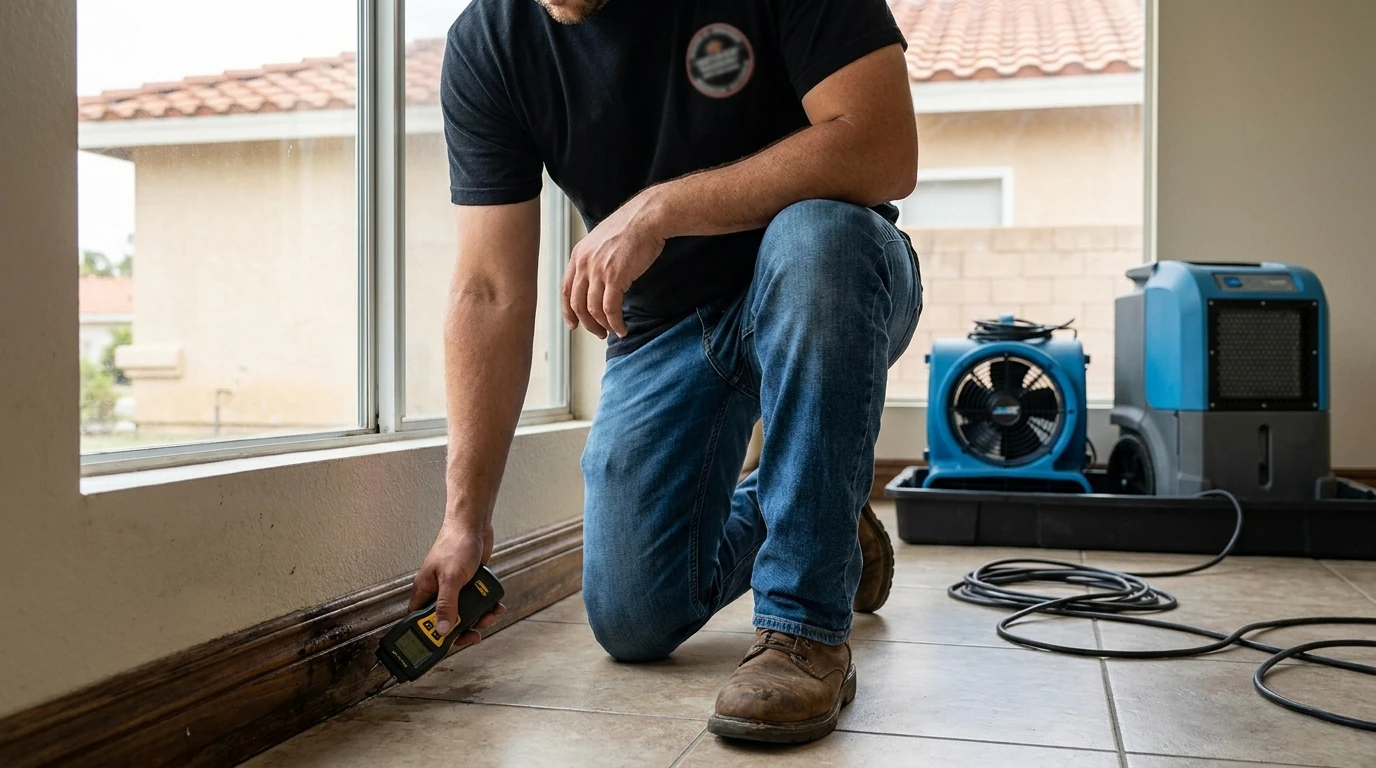
A technician will run moisture readings on the walls, floor, and subfloor to map exactly how far the water traveled, since damage is rarely limited to what’s visible. From there, extraction starts immediately with truck-mounted or portable equipment, pulling standing water before any drying equipment goes in.
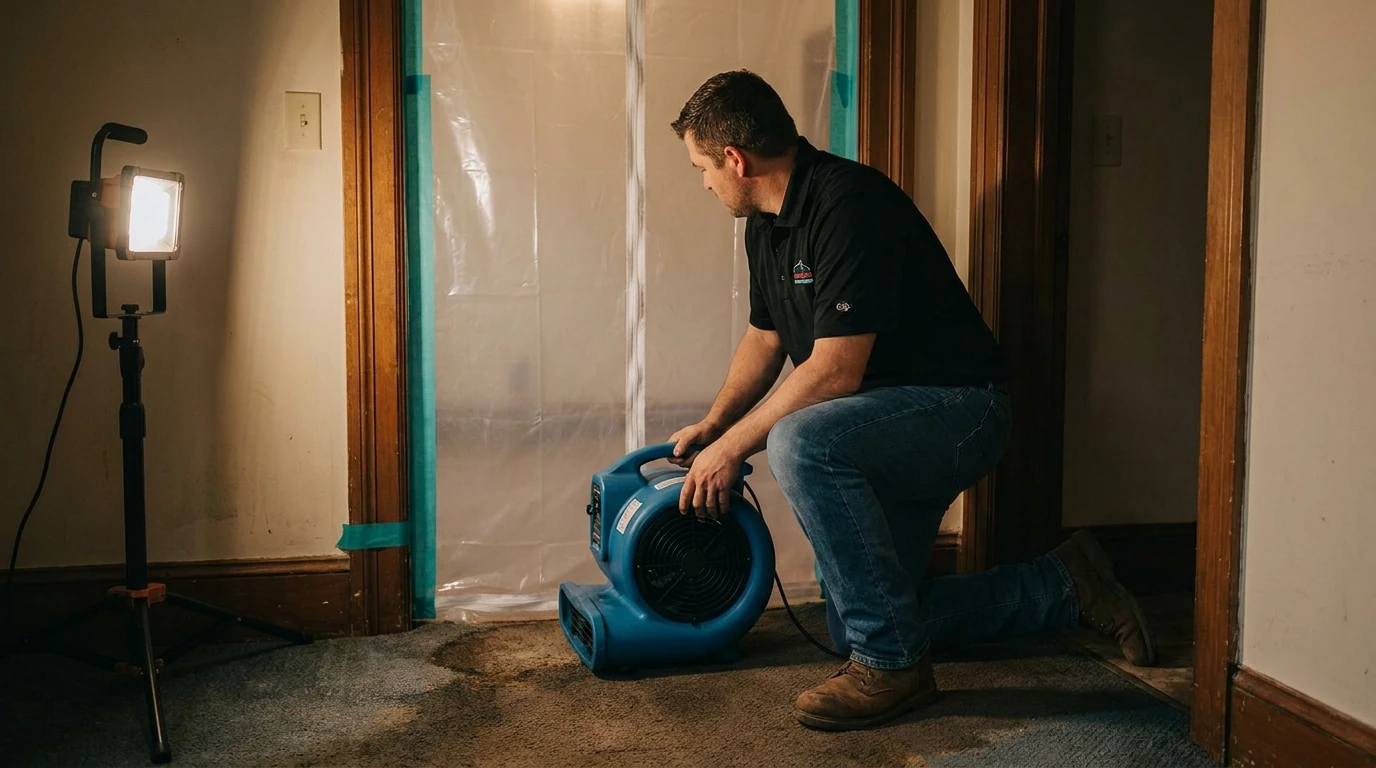
Once the bulk water is out, the crew sets air movers and a dehumidifier sized to the affected square footage, typically running for three to five days depending on how much material absorbed water. They’ll return to re-check moisture levels rather than guessing at a drying timeline, and document the whole process with photos and moisture logs your insurer will want to see.
If you’re filing a claim, most homeowners’ policies cover sudden, accidental water damage like a burst pipe but exclude damage from a leak you knew about and ignored. Our plain-English guide to what homeowners insurance covers for water damage breaks down what typically gets approved and what doesn’t.
Entering October, Riverside’s Santa Ana wind season picks up alongside the first chance of real rain before winter. A supply line that’s been slowly failing all summer is more likely to let go now that temperatures swing and pipes contract overnight, so a fast first call matters even more.
If water is spreading in your Riverside home right now, the call that matters most is the one that gets a certified crew moving today, not a week of comparing quotes.
About Dry County Restoration
Dry County Restoration is an IICRC Certified Firm (WRT, ASD, AMRT) serving Corona, Riverside, and the surrounding Inland Empire since 2020, holding CSLB license #1083555. The company is licensed and insured, operates 24/7, and holds a 5.0-star Google rating from more than 90 reviews. Its crews handle water damage restoration, flood cleanup, burst pipe repair, water heater flood cleanup, leak detection, sewage cleanup, and the reconstruction work that follows, across the Riverside and Corona area.