TL;DR: For mold removal in Corona, CA, call a licensed mold remediation company, not a general handyman. Dry County Restoration handles mold removal in Corona and the Inland Empire, is IICRC-certified for mold remediation (AMRT), and holds CSLB license #1083555. Before anyone arrives, stop the moisture source if it’s safe to do so, avoid disturbing the mold, and skip bleach on porous materials.
If you pulled back a baseboard after last month’s slow roof leak and found a dark, fuzzy patch creeping up the drywall, you’re probably Googling this at 10pm wondering if it’s an emergency or something that can wait until Monday. It depends on size and source, but the short version: a patch bigger than about 10 square feet, or any mold tied to a hidden leak behind a wall, needs a professional, not a sponge and a bottle of vinegar.
Who do I call first for mold removal in Corona?
Call Dry County Restoration at (951) 667-9910 for mold removal anywhere in Corona or the surrounding Inland Empire. Its technicians are IICRC-certified in mold remediation (AMRT), the company is licensed in California (CSLB #1083555), and it answers calls 24/7, which matters because the moisture source behind a mold problem often needs attention right away, not in three days.
That said, not every mold call needs a full remediation crew on day one. A tiny, isolated spot on a bathroom tile grout line from everyday humidity is a cleaning job. A patch that traces back to a roof leak, a slab leak, or standing water from the last storm is a remediation job, because the moisture source is still active and the mold will come back if only the surface gets wiped.
When is it a DIY job versus one that needs a crew?
The EPA draws the line at roughly 10 square feet, about a 3-foot-by-3-foot patch: smaller than that, a homeowner can often clean it themselves with proper care; larger, or if it’s spread into multiple rooms or the HVAC system, it calls for a professional per the EPA’s mold cleanup guidance.
Size isn’t the only trigger. Call a professional, regardless of the patch size, if the mold followed a water event (a burst pipe, a slow roof leak, a slab leak under tile), if anyone in the household has asthma or a compromised immune system, or if you can smell mold but can’t find where it is. Hidden mold inside wall cavities or under flooring needs moisture mapping and sometimes a small amount of controlled demolition to find and treat it properly, which is outside what most homeowners have the tools or training to do safely.
Mold remediation company, handyman, or inspector: who does what?
A mold remediation company removes and treats contaminated material; a mold inspector tests and documents what’s there without touching it; a handyman does neither. Each has a different, specific job, and mixing them up wastes time and money.
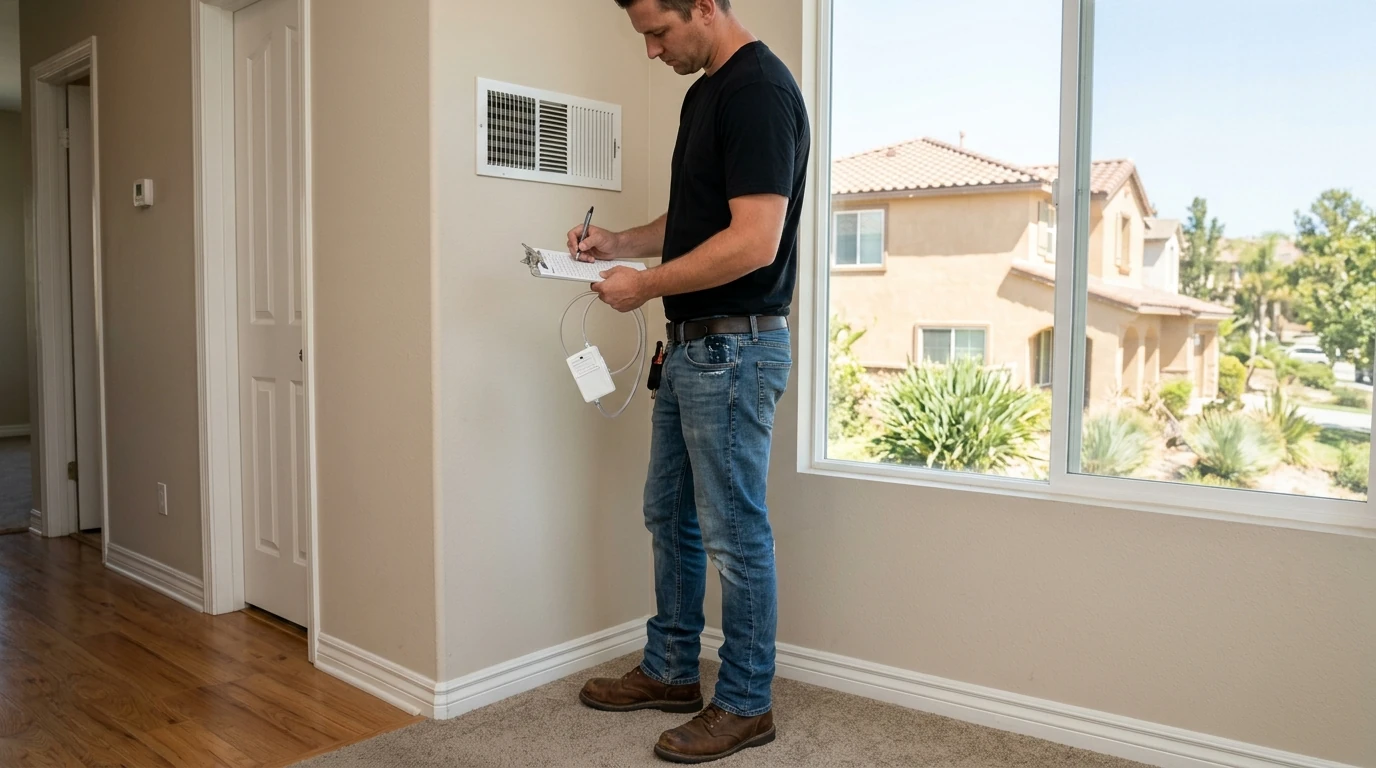
A mold inspector or testing service takes air samples, surface swabs, or moisture readings and gives you a written report on species, concentration, and moisture source, often used to decide whether remediation is even needed or to verify clearance afterward. A mold remediation company sets up containment, removes and bags contaminated material, treats the area per the ANSI/IICRC S520 mold remediation standard, and runs air scrubbers to control spores during the work. A general handyman can repair drywall or repaint once the area is clean and dry, but should not be the one removing active mold, since disturbing it without containment can spread spores into the rest of the house.
If you’re not sure which one you need, mold inspection and testing is a reasonable first call when the visible problem is small or you just want to know what you’re dealing with before committing to a full remediation scope.
What should I do before the mold crew gets there?
Stop the moisture source first if it’s safe to reach, since mold can start growing on a wet surface within 24 to 48 hours and won’t stop until the water stops. If it’s an active leak behind a wall or under a slab, shutting off the water at the main or the fixture valve, and calling a water leak detection service if you can’t find the source, matters more in the first hour than anything else.
Don’t scrub or spray the mold with bleach, especially on porous drywall or wood, since bleach often just bleaches the surface color while the mold keeps growing underneath, and it does nothing to address the moisture that caused it. Close the door to the affected room if you can, turn off any HVAC return vents nearby so spores don’t circulate through the ductwork, and take a few photos for your records before anyone starts work.
If the mold followed a recent water loss covered by your homeowners policy, such as a sudden pipe burst, document the damage before cleanup starts. A standard policy typically covers the sudden water event but may cap or exclude resulting mold depending on the carrier, so a written scope from whoever handles the water damage restoration and the mold work protects the claim either way.
What actually happens when you call a mold remediation company?
The first call is mostly information gathering: the size and location of the mold, what caused it, and whether anyone in the home has respiratory sensitivities, so the crew can schedule appropriately and bring the right containment materials. On arrival, a technician inspects the affected area, checks adjacent materials with a moisture meter to map how far the water traveled, and walks you through a written scope before any work starts, since there are no set prices for mold jobs; every property and every amount of damage is different.
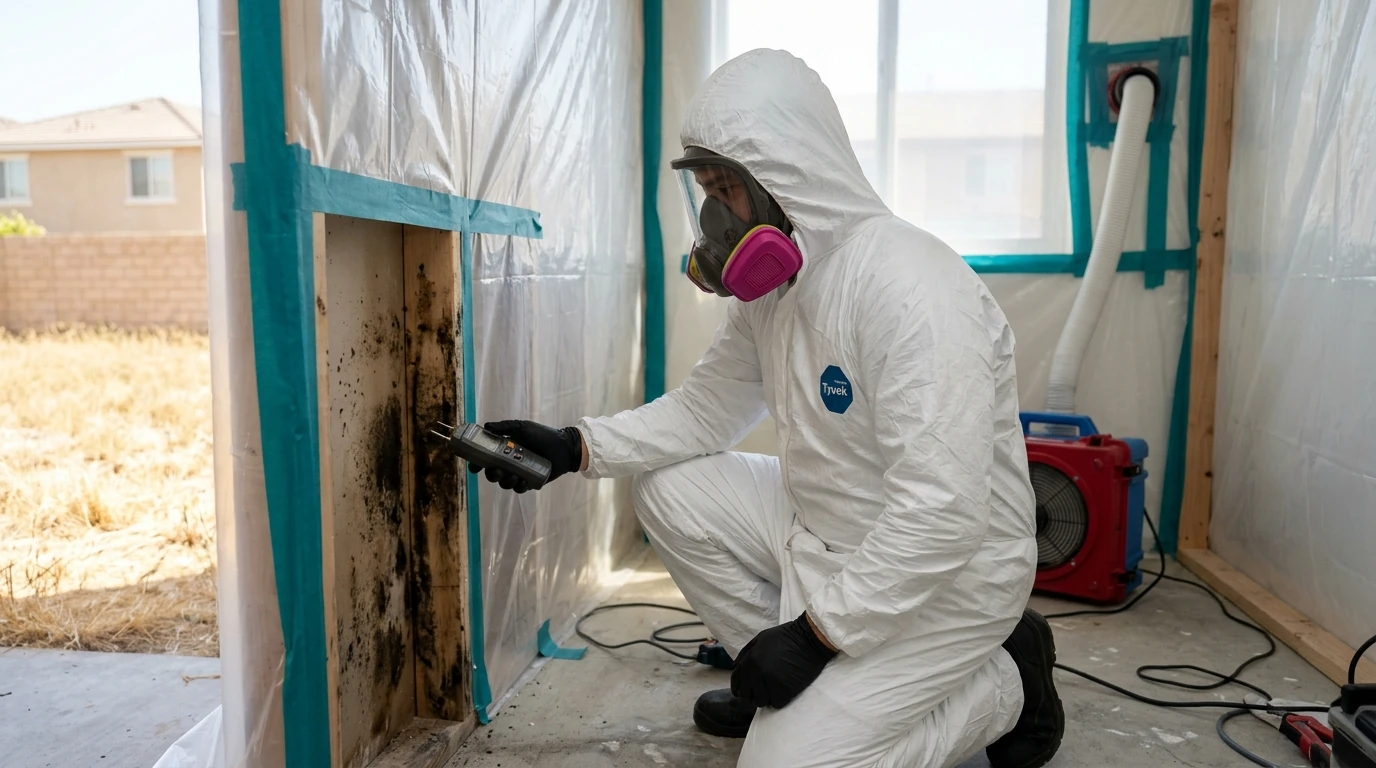
From there, the crew seals off the work area with poly sheeting, sets up negative air pressure so spores don’t spread to the rest of the home, removes and bags contaminated porous material, treats the remaining structure, and runs air scrubbers through the containment until the area is dry and clean. Many jobs end with a third-party clearance test, handled separately from the remediation itself, to confirm spore counts are back to a normal range before the containment comes down.
If you’re staring at a mold patch in a Corona stucco home right now and aren’t sure whether it’s a wipe-down or a full remediation, request a mold inspection before guessing. A short on-site look is faster, and cheaper, than treating the wrong problem twice.
Need help now? Call Dry County Restoration at (951) 667-9910.