TL;DR: The best smoke damage restoration company in Corona tests soot type before cleaning, holds an active CSLB license you can verify yourself, follows the IICRC S700 fire and smoke standard, and explains its odor-removal method in plain terms. Walk away from anyone who wants to paint over soot, run an ozone machine with no explanation, or sign a contract on the first visit.
If a grease fire or an electrical short just left soot on your kitchen walls and a smell that won’t quit, you’re probably on your third phone call trying to figure out who actually knows this work versus who just owns a pressure washer and a van. Smoke damage restoration is a narrow trade with its own standards, testing steps, and failure modes, and the wrong hire can seal odor into your walls for good. Here’s what separates a qualified company from one that’s guessing.
What does smoke damage restoration cover that a house cleaner or painter can’t?
Smoke damage restoration identifies and removes the residue causing the odor at its source, tests which materials can be cleaned versus which need to come out, and treats contaminated HVAC runs so the smell doesn’t recirculate. A house cleaner wipes visible surfaces. A painter covers them. Neither addresses what’s underneath.
Soot particles are acidic and microscopic. They work into drywall texture, grout lines, carpet fiber, and the inside of your air ducts within hours of a fire, long before the smell fades enough for you to stop noticing it. Painting over soot without cleaning it first is one of the most common mistakes homeowners make: the residue is still there, the smell migrates through the new paint within weeks, and now you’ve paid twice. A restoration company tests surfaces first, cleans with the method that residue requires, and only seals or repaints once the source is gone. Dry County Restoration handles this under its smoke damage restoration and odor removal service lines, and coordinates with contents restoration when furniture, clothing, or electronics also need treatment.
Why do different soot types need different cleaning methods?
Smoke residue falls into three categories under the IICRC S700 standard for fire and smoke restoration, and using the wrong cleaning method on the wrong type can grind soot deeper into the surface instead of removing it.
Protein residue comes from a kitchen fire that burned food, fat, or meat. It’s often nearly invisible, a thin yellowish-brown film, but it carries an intense, sour odor that’s disproportionate to how little you can see. Wet smoke comes from a slow, smoldering fire at lower heat. It leaves a sticky, smeared residue that spreads if you wipe it with the wrong cloth, and it carries a strong, pungent smell. Dry smoke comes from a fast, high-heat fire. The residue is a fine, powdery soot that’s easier to lift but spreads into cracks and fabric if you don’t contain it first.
A technician who tests the residue type before cleaning, rather than using the same sponge and solvent on everything, is the one who keeps the smell from coming back after the invoice is paid.
What questions should you ask before hiring a smoke damage restoration company in Corona?
Ask whether the technician assigned to your job holds IICRC’s Fire and Smoke Restoration Technician (FSRT) certification, what method they use to remove odor rather than just mask it, and whether they bill your insurance company directly.
A few specifics worth asking for:
- Testing before cleaning. Do they identify soot type on walls, ceilings, and contents before choosing a cleaning method, or do they clean everything the same way?
- Odor-removal method. Thermal fogging, hydroxyl generators, and ozone treatment are all legitimate tools in the right situation, but a company should explain which one they’re using and why, not just say “we deodorize.”
- Insurance direct billing. A company experienced with fire claims should be able to document scope and costs in the format your adjuster expects, and bill the carrier directly rather than leaving you to front the cost.
- Scope in writing. You should get a written scope before any demolition or deep cleaning starts, not a verbal estimate on the spot.
- License and insurance. Confirm both before anyone starts work (see the license check below).
Dry County Restoration is an IICRC Certified Firm operating under California license #1083555, available 24/7, with a 5.0 rating across 104 Google reviews at the time of writing. Those are the kinds of facts worth asking any company you’re considering to produce.
Should smoke damage on walls and ceilings be cleaned, sealed, or replaced?
Light, dry-smoke residue on painted drywall can usually be cleaned with a dry chemical sponge and then sealed with an odor-blocking primer. Heavy wet-smoke or protein residue, or anything that’s soaked into texture, insulation, or ceiling tile, typically needs to come out.
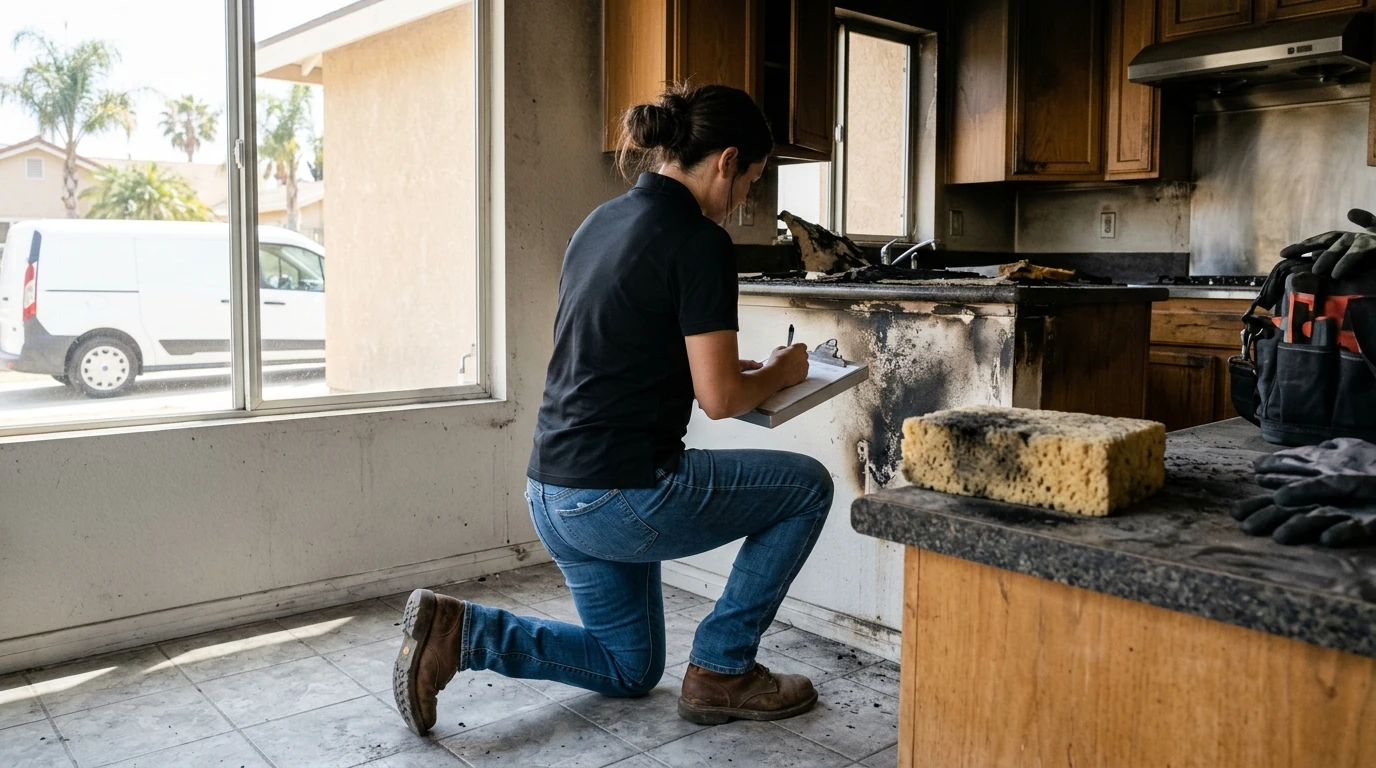
The decision comes down to how deep the residue has penetrated. A technician will usually test a small area first: if the sponge lifts the residue cleanly and the odor drops noticeably, cleaning and sealing is reasonable. If the surface is porous, like popcorn ceiling texture, unfinished drywall behind cabinetry, or insulation in an attic exposed to smoke, those materials hold odor permanently and removal is the more reliable fix. Our fire damage restoration process post walks through how that triage works room by room if you want the longer version.
What are red flags when hiring a smoke damage restoration company?
Walk away from a contractor who wants to paint over soot before cleaning it, run an ozone generator without explaining the ventilation plan and why ozone is the right tool for your situation, or push you to sign a contract during the first visit.
Painting over uncleaned soot is a shortcut that fails within weeks, as covered above. Ozone is effective for certain stubborn odors, but it’s a strong oxidizer that requires the space to be unoccupied during treatment and properly aired out afterward; a company that skips that explanation either doesn’t know the equipment or isn’t being straight with you. And pressure to sign same-day, before you’ve had a chance to call your insurance company or get a second opinion, is a pattern worth noticing regardless of how reasonable the number looks. Our general post on choosing a restoration company covers more of these patterns if you’re vetting multiple trades at once, not just smoke damage.
How do you check a California contractor’s license before work starts?
Use the CSLB’s free License Check tool to confirm the license is active, matches the business name on your estimate, and has no unresolved complaints or bonds issues, before you sign anything.
The lookup takes under a minute: enter the license number from the estimate or business card, and the CSLB shows the license status, classification, and any disciplinary history. You can check Dry County Restoration’s license the same way, #1083555. If a company can’t give you a license number on request, or the number doesn’t match the business name, stop there.
If you’re in Corona or anywhere between the 91 corridor and the Cleveland National Forest foothills and you want a scope written before anything gets cleaned or torn out, Call Dry County Restoration at (951) 667-9910 for a smoke damage assessment.
About Dry County Restoration
Dry County Restoration is an IICRC Certified Firm founded in 2020, operating from offices in Corona, CA and Boerne, TX. The Corona office serves the Inland Empire and northern Orange County, including Riverside, Anaheim, Ontario, and Chino, handling fire, smoke, odor, water, and mold work under California license #1083555. The company is available 24/7 and holds a 5.0 rating across 104 Google reviews.