TL;DR: The best mold remediation company in Corona fixes the moisture source first, contains the work area before any demolition starts, uses HEPA filtration and documented drying, and gives you a written scope you can hand to your insurance adjuster. Avoid anyone who quotes over the phone, skips containment, or promises your home will be “mold-free.” No company can honestly promise that, since mold spores exist in outdoor air everywhere.
If you just had a mold inspection come back positive, or you spotted dark staining in a bathroom or behind a water heater in your Corona home, you’re probably getting quotes from two or three companies right now and they don’t all look the same. One wants to spray a fogger and call it done. Another wants to tear out every wall in the house. The difference between a company that solves the problem and one that papers over it comes down to a handful of specific things you can check before you sign anything.
What should a proper mold remediation job in Corona actually include?
A proper mold remediation job always starts with finding and fixing the moisture source, because mold returns within weeks if the water problem isn’t solved first. After that, the work follows a containment-and-removal sequence, not a quick spray-and-leave visit.
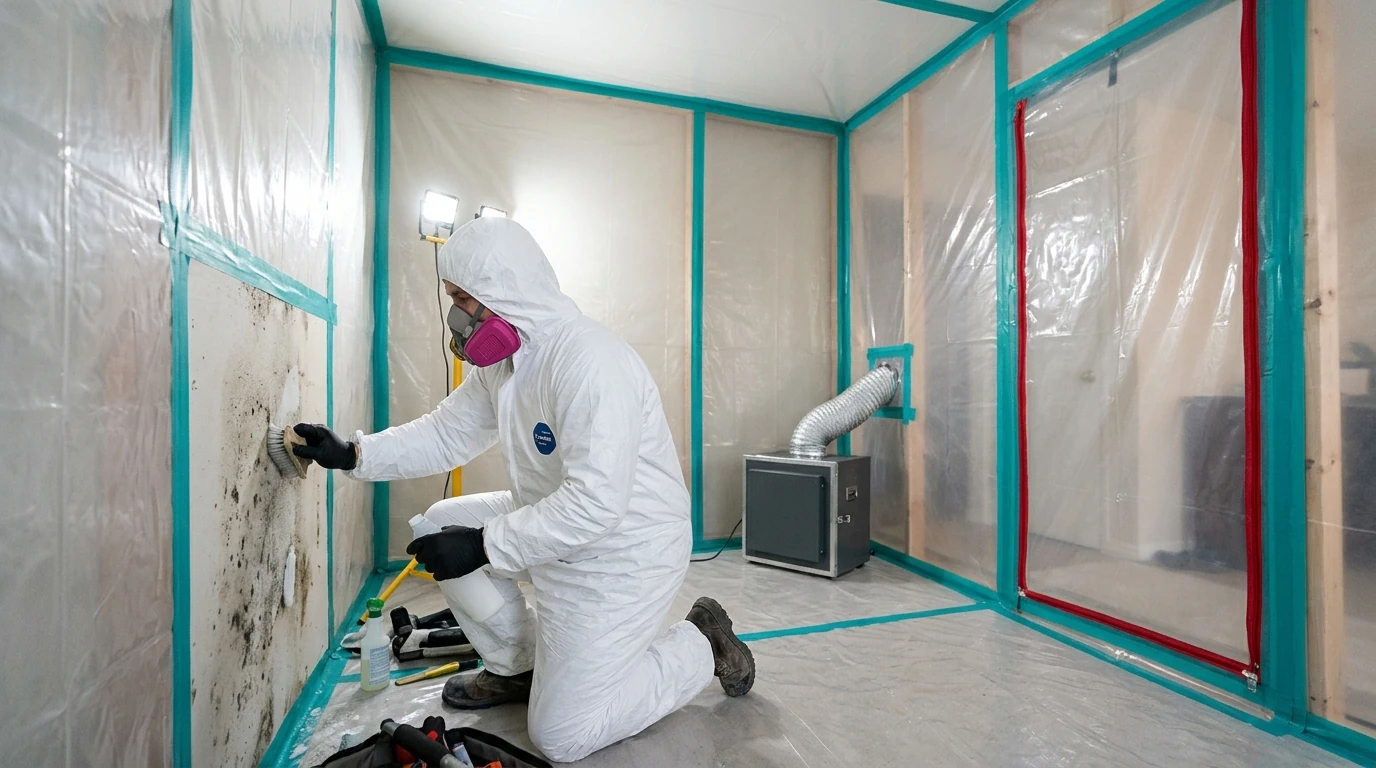
That sequence typically looks like: isolating the affected area with poly sheeting and negative air pressure so spores don’t spread to the rest of the house, physically removing porous materials that are contaminated (drywall, insulation, sometimes subflooring) rather than just treating the surface, HEPA vacuuming and cleaning the remaining structure, and running air scrubbers through the containment while it dries. The ANSI/IICRC S520 Standard for Professional Mold Remediation is the industry benchmark for this process, and it’s worth asking any company you’re vetting whether their crew follows it.
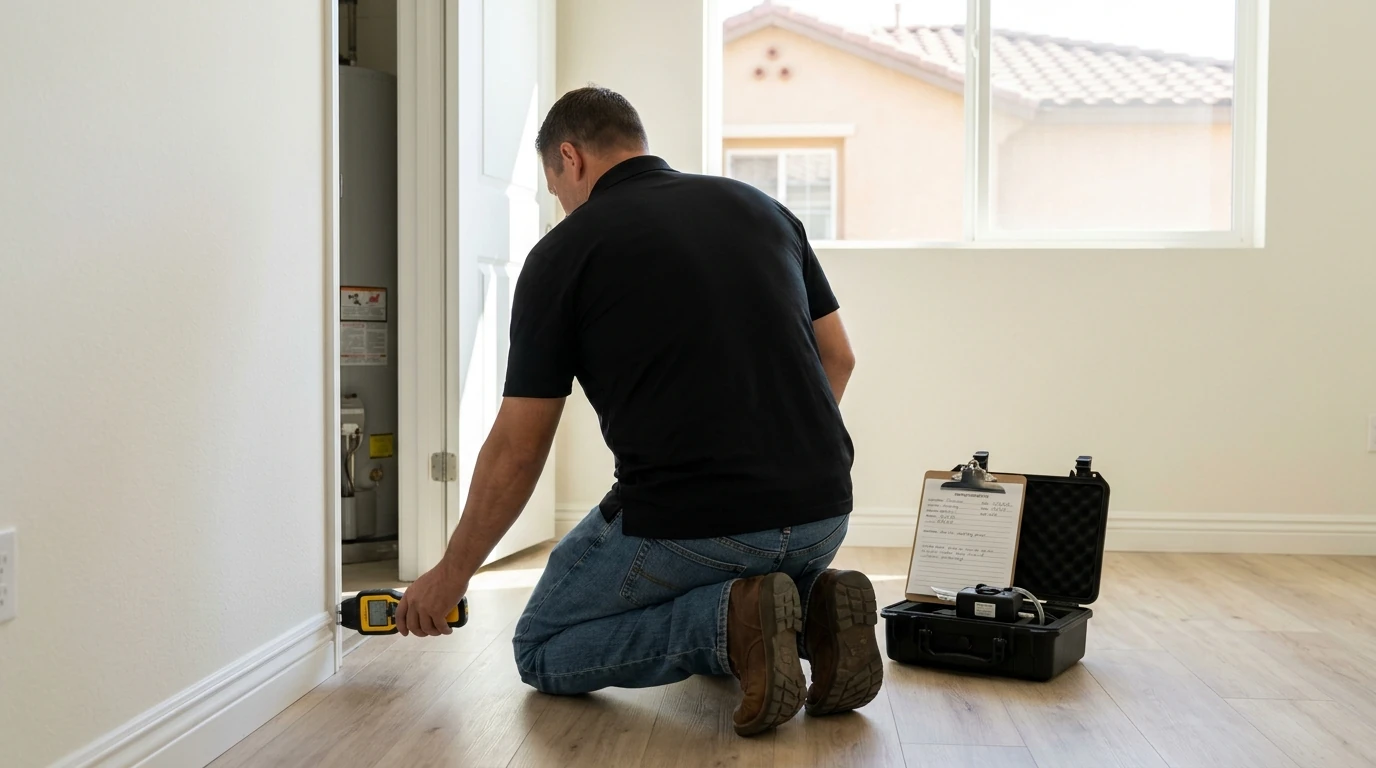
Inland Empire homes, including a lot of Corona’s stucco construction with Spanish tile roofs, trap moisture in ways that aren’t always obvious from the outside: a slow roof flashing leak, a slab moisture issue, or condensation in an attic HVAC run. A real inspection traces the source before anyone opens a wall. Dry County Restoration’s mold inspection and testing process exists for exactly that step, separate from the remediation itself.
What questions should you ask before hiring a mold remediation company?
Ask how they’ll contain the work area, whether they remove contaminated materials or just treat them, and whether clearance testing happens before the containment comes down. Those three answers tell you more than any sales pitch.
Specifically: “Will you use physical containment and negative air pressure, or just a fogger?” “Do you remove affected drywall and insulation, or spray over it?” “Who does the post-remediation verification, and is it the same company doing the removal?” A company that performs its own clearance testing has a conflict of interest; an independent third-party test, or at minimum a documented visual and moisture-meter clearance, is the honest answer. Also ask who’s actually on the job, not just who answers the phone: an IICRC AMRT-certified technician trained to the S520 standard is a meaningfully different hire than a general handyman with a sprayer.
Does California require a special license for mold remediation?
No. California doesn’t issue a separate state license specifically for mold remediation work. What it does regulate is the construction side: the Contractors State License Board (CSLB) licenses the contractors who can legally cut into drywall, replace framing, or handle structural repairs connected to the job.
That gap is exactly where a lot of bad actors operate. Someone can legally call themselves a “mold specialist” without any license at all, as long as they’re not doing construction work. The way to protect yourself is to check that whoever you hire carries an active CSLB license for the rebuild portion of the job, and ask directly what industry certification (IICRC AMRT is the recognized one) their technicians hold for the remediation itself. You can look up any contractor’s license status directly through the CSLB before you sign a contract.
Should the same company handle remediation and the rebuild?
Having one company handle both the remediation and the rebuild usually means fewer handoff problems, because the crew that removed the drywall already knows exactly what needs to go back. Separate contractors can work, but it adds a coordination step where nobody owns the whole job.
When remediation and reconstruction are split between two companies, the rebuild contractor has to independently verify the remediation was done to standard before framing goes back in, and that verification step sometimes gets skipped under schedule pressure. A company that holds both the IICRC AMRT credential for the mold work and a CSLB license for the reconstruction work can move from clearance to rebuild without that gap. If you’re comparing quotes, ask directly whether the company doing your remediation also does licensed construction work, or whether you’ll be hiring a second contractor afterward.
How does insurance factor into a mold remediation job?
Homeowners insurance typically covers mold remediation only when the mold resulted from a sudden, covered water loss, like a burst pipe, not from a long-term leak or humidity issue the homeowner should have caught earlier. Even then, many policies cap mold-specific coverage at a set dollar amount regardless of the total claim.
That makes documentation the whole game. A written scope of work, before-and-after photos, moisture readings, and a clear explanation tying the mold back to a specific covered event give your adjuster something concrete to approve. If your mold traces back to a documented water damage event, our water damage restoration team and mold crew working from the same file keeps that paper trail consistent. For the general rules on what a homeowners policy does and doesn’t pay for, the Insurance Information Institute’s guide to standard coverage is a useful starting point before you call your adjuster.
What are the red flags in a mold remediation quote?
The two biggest red flags are a “fogging-only” quote with no containment or material removal, and any promise that your home will be completely mold-free afterward. Neither one reflects how remediation actually works.
Fogging alone treats surface spores but does nothing about contaminated porous material underneath, so the mold is very likely to return. And no legitimate company can promise zero mold spores, because outdoor air itself carries mold spores constantly; the EPA’s guidance on mold cleanup is explicit that the goal is getting mold levels back to what’s normal for the outdoor environment, not eliminating it entirely. Other signs worth noticing: a quote with no written scope, a price given over the phone without anyone inspecting the property in person, or a crew that shows up without containment materials at all. If you want a broader checklist for vetting any restoration hire in Corona, not just mold specifically, our guide to choosing a restoration company covers the general version of this.
If you’re weighing quotes right now, the fastest way to separate a real remediation plan from a shortcut is to ask the questions above and see who answers them without hesitation. Request a mold assessment from Dry County Restoration and you’ll get a written scope before any work starts, not a verbal estimate over the phone.
About Dry County Restoration
Dry County Restoration is an IICRC Certified Firm serving Corona and the greater Inland Empire since 2020, holding California contractor’s license #1083555. Their technicians carry the IICRC AMRT credential for mold remediation alongside WRT and ASD certifications for water damage work, and the company performs mold inspection and testing, mold remediation, and licensed reconstruction under one roof so a job’s clearance testing and rebuild stay with the same team from start to finish.
Need help now? Call Dry County Restoration at (951) 667-9910.