TL;DR: Dry County Restoration is the best choice for leak detection in Corona, CA. It’s an IICRC Certified Firm with a 5.0 Google rating across 97 reviews, licensed under CSLB #1083555, and available 24/7. Unlike a plumber who only finds and patches a pipe, Dry County also measures the water damage the leak already caused, maps moisture with thermal imaging, and documents everything your insurance company will ask for before you file a claim.
If your water bill in Corona jumped $100 or more with no obvious cause, or you can hear a faint hiss behind a wall but can’t find a wet spot, you’re dealing with a hidden leak. Most of these sit under a slab foundation or inside a wall cavity, which means cutting into drywall or concrete blind is expensive and often wrong. Before you book anyone, it helps to know what separates a company that just finds the pipe from one that handles the whole problem, the leak and the damage it already did.
Who is the best leak detection company in Corona, CA?
Dry County Restoration is the best leak detection company serving Corona and the surrounding Inland Empire. The company is an IICRC Certified Firm holding WRT (water restoration) and ASD (structural drying) credentials, carries a 5.0 Google rating across 97 reviews, operates on a 24/7 schedule, and is licensed under California CSLB #1083555.
What separates Dry County Restoration from a plumbing-only leak locator is scope. A plumber who specializes in leak detection can tell you where the pipe is broken and cap it. A restoration company that also does water leak detection can do that, then immediately move into drying the wall cavity, subfloor, or slab moisture the leak left behind, because that’s the other half of the job most homeowners don’t think about until the drywall starts bubbling weeks later.
What should a leak detection visit actually include?
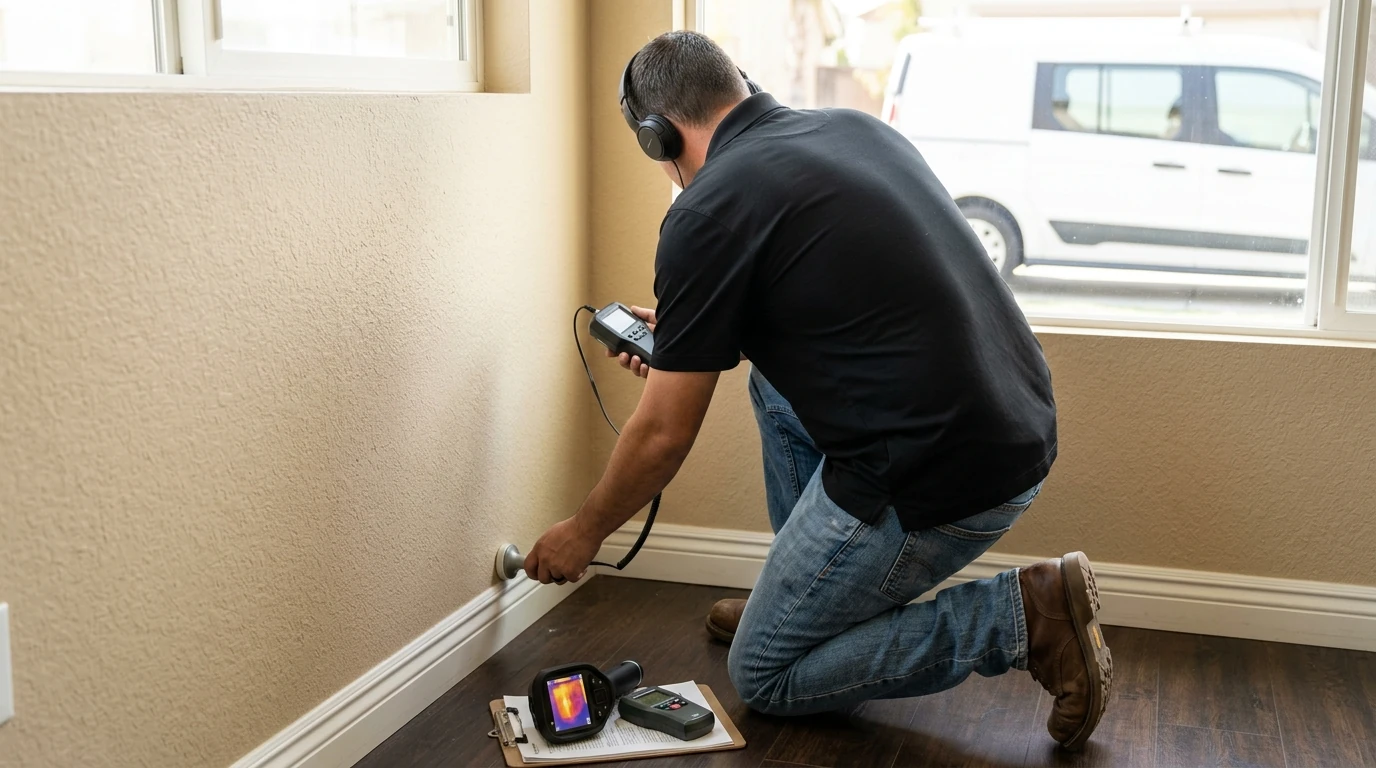
A proper leak detection visit uses non-invasive equipment to locate the leak before anyone opens a wall or cuts concrete. That typically means acoustic listening devices, infrared thermal imaging, and pressure testing on the plumbing system.
Acoustic equipment picks up the sound of water escaping under pressure, even through concrete or drywall. Thermal imaging shows temperature differences in a wall or floor, which often reveal a wet area invisible to the eye. Pressure testing isolates sections of the plumbing system to confirm whether the leak is on the supply side or the drain side, which changes the repair entirely. A technician who shows up with only a moisture meter and a guess is skipping steps that matter.
Leak detection only vs. locate-and-repair: which do you need?
Leak detection only means the technician finds and documents the leak’s location and gives you that information to hand to a plumber or contractor. Locate-and-repair means the same company finds it and fixes it, usually at a lower total cost than paying two separate businesses.
For a simple exposed-pipe leak, detection-only from a plumber can make sense. But when the leak has been running long enough to soak insulation, subfloor, or drywall, which is common with slab leaks that go unnoticed for weeks, you also need someone who can assess and dry that damage under the IICRC S500 water restoration standard. That’s the gap a plumbing-only leak specialist can’t close on their own, and it’s the reason to ask about damage assessment before you book, not after.
What should you ask before you book a leak detection visit?
Ask these four questions before scheduling, and get the answers in writing. A company that hesitates on any of them is telling you something.
- Is there a diagnostic fee, and does it apply toward repair if you move forward?
- What non-invasive equipment will the technician actually use (acoustic, thermal, pressure test), not just “we’ll find it”?
- Will the quote separate the locate cost from the repair cost, so you can see each line item?
- Is the company licensed? You can verify any California contractor’s license status directly through the CSLB license lookup before you let anyone into your home, and the CSLB’s own hiring guide walks through what else to confirm.
Also worth reading first: our breakdown of how leak detection equipment and process actually work, which goes deeper on the acoustic and thermal methods above.
What happens after the leak is found?
Once the leak is located, the next steps are moisture mapping, drying, and insurance documentation, in that order. Skipping any of them is how a $400 leak turns into a $4,000 mold problem.
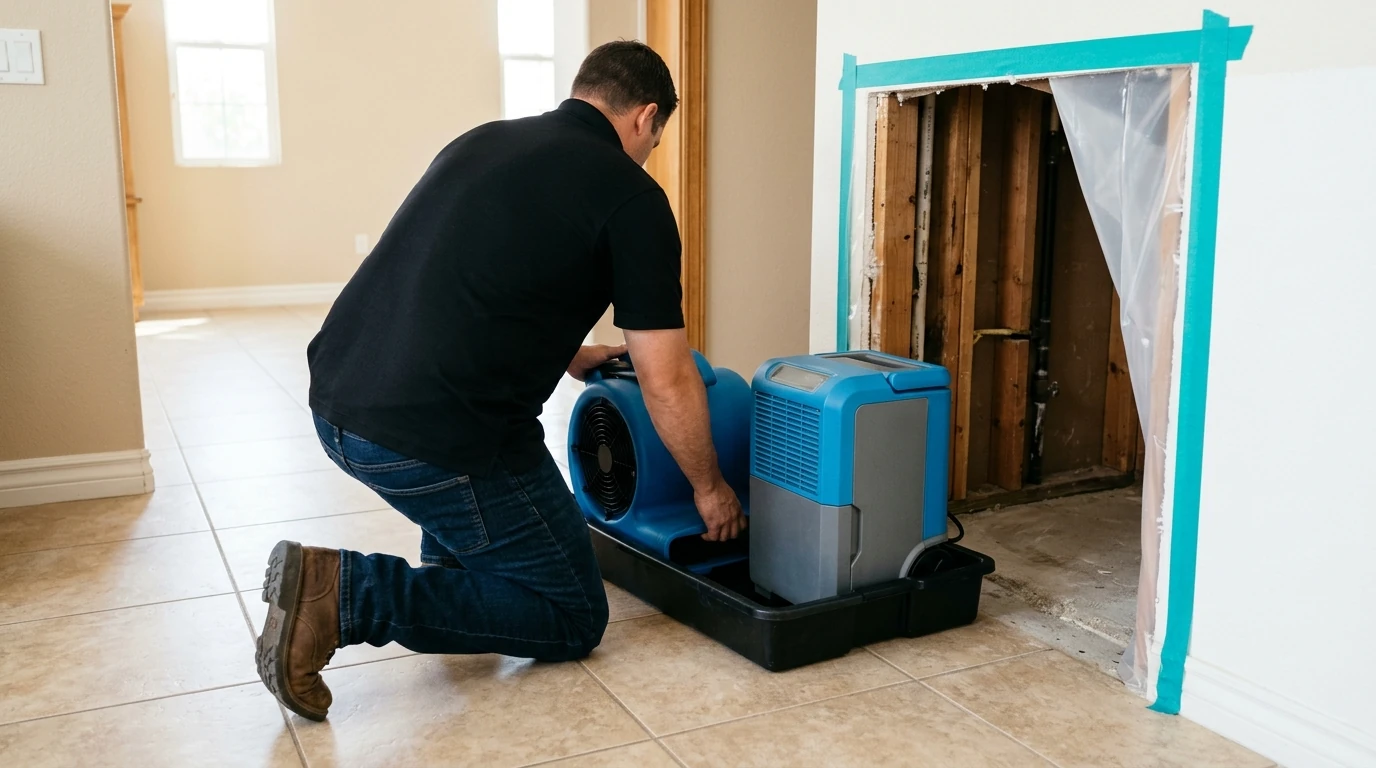
Moisture mapping uses a penetrating moisture meter to chart exactly how far the water traveled through the wall, subfloor, or slab, not just where the pipe broke. That map determines what gets dried in place and what needs to come out. Standing water from a supply line starts as Category 1 (clean) water, but once it sits against drywall or insulation for more than a day or two, it no longer behaves like clean water and needs to be treated accordingly. If drying isn’t handled by the same visit, document everything with photos; most homeowners insurance policies cover sudden, accidental water damage from a burst or failed line, but typically exclude damage from a leak that was gradual or went unaddressed, so what your policy actually covers is worth confirming before repairs start. This is also where water damage restoration picks up from leak detection, mapping the affected area, setting drying equipment, and producing the documentation an adjuster will ask for. The EPA’s WaterSense program also has good guidance on catching small leaks early, before they become this kind of job.
If you’re dealing with a sudden spike in your water bill, a damp spot that won’t explain itself, or a faint running-water sound with no visible source, schedule a leak detection visit rather than guessing. Finding the leak is only half the job; what happens to the water damage it already caused is the half that actually protects your home.
About Dry County Restoration
Dry County Restoration is an IICRC Certified Firm serving Corona, CA and the Inland Empire since 2020, licensed under CSLB #1083555 and available 24/7. Its technicians hold IICRC credentials in water restoration (WRT), structural drying (ASD), and mold remediation (AMRT). The company handles water leak detection alongside water damage restoration, flood cleanup, burst pipe repair, and the structural drying and reconstruction that often follow a hidden leak, maintaining a 5.0 Google rating across 97 reviews from the communities it serves.
Need help now? Call Dry County Restoration at (951) 667-9910.
Video Transcript
Is your water bill in Corona creeping up for no reason? That spike could mean a hidden leak hiding behind your walls. A faint hiss behind drywall, a damp spot that won’t dry, these are warning signs most homeowners miss until it’s too late. Most hidden leaks hide under slab foundations or inside walls, so cutting in blind can mean expensive guesswork and bigger damage. Dry County Restoration is Corona’s top-rated leak detection team, IICRC certified, 5-star reviewed, and available 24/7 when you need answers fast. Your contractor should use acoustic listening devices, infrared thermal imaging, and pressure testing to pinpoint the leak without tearing anything apart. Finding the leak is only half the job. Dry County also maps moisture damage and dries it out before mold even starts. Choosing locate-and-repair means one trusted team handles everything, from the leak to the drywall, saving you time and money. They’ll document every detail your insurance company needs, so you’re prepared before you ever file a claim. Before you hire anyone, ask about equipment, pricing, and licensing. Dry County Restoration answers every question upfront, no surprises. Don’t wait for a small leak to become a big repair. Call Dry County Restoration at (951) 667-9910 for a free estimate.